Bernie Sanders Pledges to Legalize Cannabis If Elected

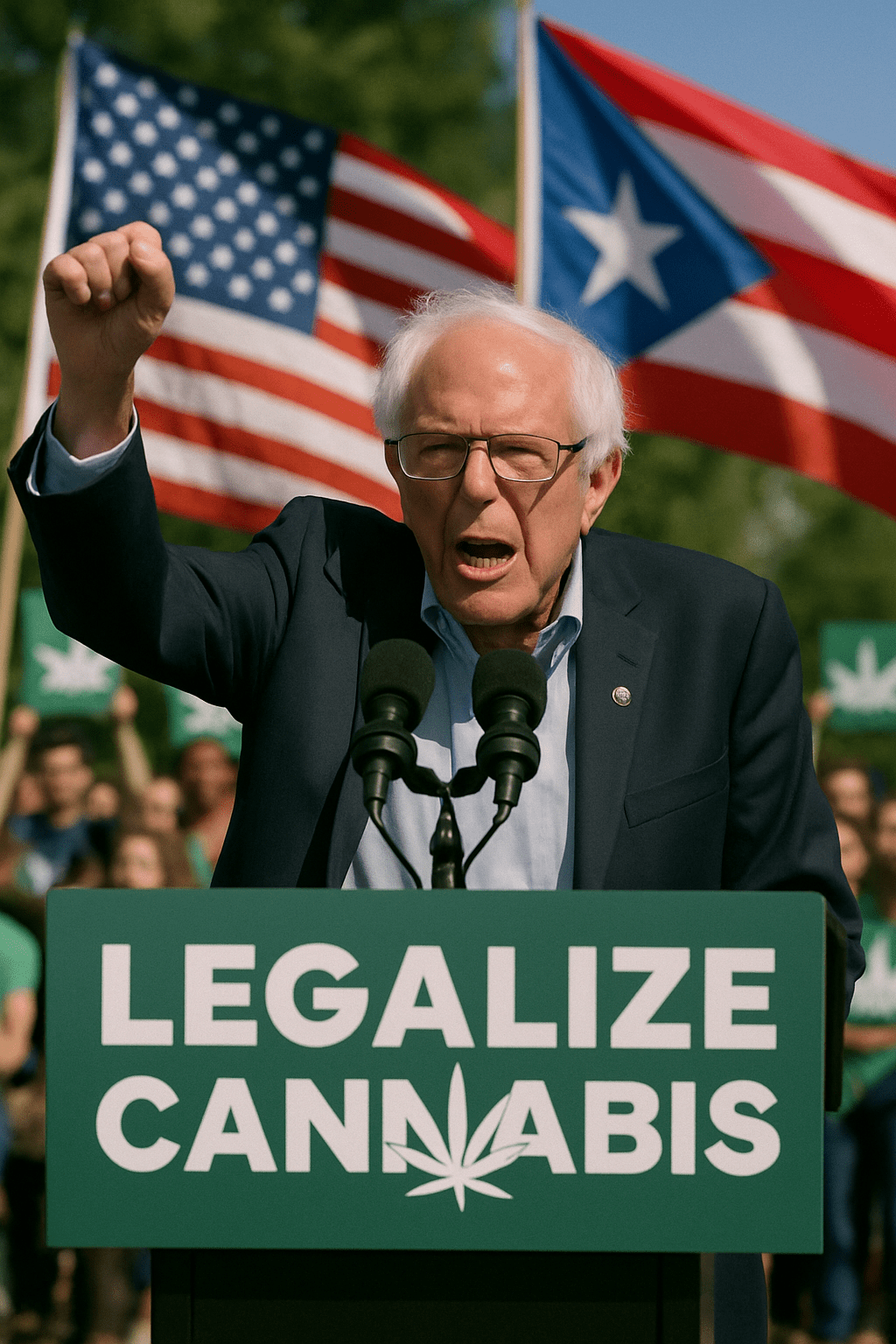
As the U.S. presidential election intensifies, Bernie Sanders has emerged as a central figure advocating for sweeping marijuana reform. During a lively rally in Puerto Rico, Sanders made a bold election promise: to legalize cannabis nationwide if elected president. This pledge not only reignites the debate over drug policy in America but also highlights the intersection of social justice, economic opportunity, and public health concerns tied to cannabis legalization. Sanders’ commitment speaks to the shifting tides of public opinion and political platforms across the country, where recreational cannabis and medicinal marijuana debates increasingly dominate policymaking conversations.
At the heart of Sanders’ cannabis legalization agenda lies a push to address the burden of criminal records among millions of Americans penalized for nonviolent marijuana offenses. His proposal aims to tackle systemic inequalities exacerbated by the war on drugs, promising to reduce court backlogs, ease prison overcrowding, and stimulate the job market by creating a regulated cannabis industry. This vision aligns with broader global trends seen in places like Canada and several U.S. states, where cannabis decriminalization has changed the landscape of law enforcement and economic activity.
Sanders’ remarks also underscore the cultural dynamics influencing cannabis reform politics. Despite his playful struggles with Spanish during the Puerto Rico rally, his straightforward “Yes” response to legalizing marijuana resonated strongly with voters. Across the U.S., political support for cannabis legalization has expanded dramatically since the early 2000s, with even some erstwhile opponents shifting position. Observing the complexities of federal-state relations around drug laws adds another layer of intrigue to how Sanders’ promise might translate into practical change once in office.
While the current Republican contender, Donald Trump, offers a contrasting approach, Sanders’ cannabis legalization pledge galvanizes an evolving political movement prioritizing social justice and economic innovation. With new states progressively adopting cannabis-friendly laws and regulatory frameworks, the pending presidential election could prove pivotal in shaping the future of marijuana reform nationwide. The following sections will explore the multiple facets of Bernie Sanders’ cannabis legalization plan and its potential impact on America’s drug policies in 2025.
Bernie Sanders’ Cannabis Legalization Election Promise: A National View on Marijuana Reform
Bernie Sanders’ commitment to legalize cannabis throughout all 50 states represents a significant departure from previous federal drug policies. His election promise centers on enacting marijuana reform on day one of his presidency, using executive authority to swiftly remove cannabis from the list of controlled substances as it currently stands under the Controlled Substance Act.
This promise addresses a critical inconsistency: while a growing number of states have legalized recreational cannabis and medicinal marijuana, cannabis remains federally illegal, generating conflicts in law enforcement and commerce. Sanders argues this federal-state dichotomy creates unnecessary legal challenges for individuals and businesses operating legally within their states.
Potential Effects of Cannabis Decriminalization under Sanders’ Platform
Legalizing cannabis nationwide under Sanders’ platform is expected to:
- Reduce incarceration rates: Millions of Americans are currently imprisoned or have criminal records due to nonviolent cannabis offenses, impeding their employment opportunities.
- Generate economic growth: The legalized cannabis industry is one of the fastest-growing sectors, and federal legalization would remove banking and federal tax barriers hindering its expansion.
- Shift police resources: Law enforcement could redirect efforts from cannabis-related arrests toward violent crimes and other public safety priorities.
- Improve public health policy: Federal recognition of cannabis’ medicinal value would enhance research funding and access to treatment options.
In a table below, we compare the status of cannabis legalization in various U.S. states as a snapshot of the current fragmented landscape:
| State | Recreational Cannabis Status | Medicinal Marijuana Status | Year of Legalization |
|---|---|---|---|
| California | Legalized | Legalized | 2016 |
| Texas | Illegal | Limited Medical Use | N/A |
| Illinois | Legalized | Legalized | 2019 |
| Florida | Illegal | Legalized | 2016 |
| New York | Legalized | Legalized | 2021 |
Bernie Sanders’ vision would harmonize these differing state laws under a comprehensive federal framework, which could prevent conflicts in interstate commerce and protect patients and consumers regardless of their state of residence. However, critics argue that such rapid change could complicate enforcement and regulatory oversight without precise implementation plans.
To deepen understanding of cannabis legalization history and its sociopolitical contours, readers can explore developments outside the United States, such as cannabis policy shifts in Canada and legislative discussions in France, which provide useful comparative perspectives.
Social Justice and Economic Impact: Why Bernie Sanders Advocates Cannabis Legalization
At the core of Bernie Sanders’ campaign is a strong belief that cannabis legalization serves as a tool for social justice reform. Many Americans—particularly from marginalized communities—have endured disproportionate consequences from the war on drugs. Sanders repeatedly emphasizes how past cannabis convictions have led to a cycle of unemployment and social exclusion, fueling economic disparities.
His approach towards cannabis reform includes provisions for:
- Expungement of criminal records for those convicted of marijuana-related offenses.
- Creating industry opportunities that prioritize individuals from communities most affected by prohibition, ensuring ownership and employment in the emerging cannabis market.
- Reducing prison populations by removing cannabis offenses from federal criminal statutes.
Such a framework draws upon studies linking affirmative action in cannabis licensing to positive economic uplift in disadvantaged neighborhoods. Additionally, the decriminalization of cannabis could offer significant relief to courts and law enforcement agencies overwhelmed by nonviolent drug-related cases.
Analyzing Cannabis Legalization’s Broader Societal Effect
Several key societal impacts of comprehensive cannabis legalization include:
- Economic revitalization: Reports have shown legalized cannabis states benefiting from increased tax revenues and job creation, offering models for Sanders’ proposed nationwide reform.
- Racial equity advancement: By prioritizing communities harmed by prohibition in cannabis industry participation, Sanders aims to bridge systemic socioeconomic gaps.
- Judicial efficiency: Fewer marijuana-related cases would allow courts to focus on serious crimes, improving justice system responsiveness.
- Public health improvements: Enhanced regulation and education could improve safe cannabis consumption and reduce unregulated market risks.
Table illustrating estimated economic and social effects from cannabis legalization:
| Impact Area | Expected Outcome | Example State Data |
|---|---|---|
| Tax Revenue | Increased by billions annually | Colorado: $423 million in 2023 |
| Employment | Creation of tens of thousands of jobs | California: 155,000 jobs in cannabis sector |
| Criminal Justice | Decrease in cannabis-related arrests | Oregon: 50% reduction post-legalization |
| Health & Safety | Better consumer protection and education | Washington State: Enhanced labeling laws |
To contextualize Sanders’ vision with recent global trends, one can look at growing international moves toward cannabis reform such as New Zealand’s evolving medical cannabis policies, reflecting increasing worldwide openness to medicinal marijuana.
Federal Challenges and Legal Complexities in Cannabis Legalization Efforts Under Sanders
Despite broad public support and growing state-level legalization, the path to cannabis legalization at the federal level remains fraught with challenges. Bernie Sanders’ promise to legalize marijuana nationwide through executive order raises critical questions about the extent of presidential authority in drug policy reform.
Federal complications include:
- Controlled Substance Act: Cannabis remains classified alongside heroin, complicating reclassification efforts.
- Banking obstacles: Cannabis businesses face difficulties accessing traditional financial services due to federal illegality.
- Interstate commerce regulation: Without federal clarity, transporting cannabis across state lines remains illegal.
- Opposition from federal agencies: Agencies such as the DEA have historically resisted cannabis reclassification.
Legal experts debate whether an executive order can, on its own, achieve full legalization or if legislative action from Congress would be necessary for comprehensive and sustainable reform. Sanders’ approach also needs to navigate competing political interests and possible legal challenges.
The following table outlines federal versus state cannabis regulations and the potential areas affected by national legalization:
| Aspect | Federal Status | State Variance | Potential Post-Legalization Status |
|---|---|---|---|
| Classification of Cannabis | Schedule I controlled substance | Legal in some states, illegal in others | Removed from Schedule I and federally legal |
| Banking and Financial Services | Restricted due to federal prohibition | Varies by state | Accessible nationwide for cannabis businesses |
| Interstate Commerce | Illegal to transport cannabis across state lines | Restricted within state borders | Regulated under federal framework |
| Research and Medical Use | Limited by Schedule I status | Growing access in medicinal marijuana states | Expanded federal research and medical programs |
For readers interested in the broader policy discussions surrounding cannabis legalization, detailed reports and political analysis such as those covering debates in France offer valuable insight into the complexity of drug reform movements beyond the U.S. context.
Cultural and Political Resonance of Bernie Sanders’ Cannabis Legalization Pledge
The cultural signals sent by Bernie Sanders openly acknowledging marijuana use and vigorously pushing legalization reflect broader shifts in American society. Sanders’ candid admission, during a Michigan rally, of having smoked cannabis lends authenticity to his stance and aligns him with the many voters who view cannabis as a normalized part of their culture.
His candid dialogue with the rap artist Killer Mike about the ‘drug war’ highlighted a long-standing issue: the disparity and discrimination in drug enforcement policies. Sanders’ message that the federal classification of cannabis is illogical resonates with activists and ordinary citizens advocating for reform.
Key cultural and political factors surrounding Sanders’ cannabis push include:
- Breaking taboos: Sanders’ openness helps reduce stigma around cannabis use.
- Youth engagement: His stance attracts younger voters supportive of marijuana legalization.
- Bridging political divides: Cannabis reform enjoys bipartisan support in many states, reflecting evolving attitudes.
- Highlighting economic equity: Emphasizing social justice in cannabis policy connects grassroots activism to electoral politics.
These dynamics suggest that cannabis legalization is no longer just a fringe issue but a mainstream policy topic influencing electoral outcomes and political platforms, both nationally and locally. The video of Sanders’ interaction with Killer Mike further illuminates his long-term commitment to drug policy reform and racial equity.
For additional cultural context, exploring cannabis legalization movements and political stances internationally, such as in Marseille, provides a comparative look at how these debates resonate across diverse societies.
Future Outlook: How Nationwide Cannabis Legalization Under Bernie Sanders Could Reshape America’s Drug Policy Landscape
Looking ahead, Bernie Sanders’ pledge to legalize marijuana presents a potentially transformative moment in the United States’ evolving approach to drug policy. If enacted, this reform could pivot the country away from punitive drug enforcement toward a more progressive, health-centered, and economically pragmatic framework.
Among the expected long-term changes resulting from federal cannabis legalization are:
- Unified regulatory standards: Creating a single legal framework to replace the patchwork of state policies.
- Expanded research and development: Facilitating scientific studies on medicinal marijuana efficacy and new cannabis products.
- Medical accessibility improvements: Enhancing opportunities for patients to access cannabis therapies nationwide.
- Market innovation and growth: Encouraging new business models and investment in cannabis-related technology and agriculture.
- International influence: Positioning the U.S. as a leader in global cannabis policy reform.
Authorities and industry players will face challenges balancing regulation with innovation, requiring careful policy design and community engagement. The successful implementation of Sanders’ plan could serve as a blueprint for other jurisdictions interested in cannabis reform, echoing international movements such as those documented in Saskatchewan and Alberta.
| Future Impact Area | Potential Benefits | Relevant Examples |
|---|---|---|
| Health & Medicine | Better patient access & innovative therapies | New Zealand’s emerging medical cannabis sector |
| Economic Growth | Job creation & tax revenue expansion | California & Colorado cannabis markets |
| Social Equity | Reduction of racial disparities | Expungement programs in various states |
| Legal & Regulatory | Standardized federal guidelines | Canada’s Cannabis Act framework |
| International Relations | Setting precedent for global policy reform | Influence on EU and Latin American markets |
Given the nationwide momentum for cannabis reform, Sanders’ pledge could represent a tipping point, pushing the United States into a new era of drug policy that balances personal freedom, social justice, and economic opportunity.


Post Comment