Cannabis Legislation is Changing Worldwide, While France Remains Stuck in the Past

Across the globe, cannabis legislation is undergoing profound changes, with numerous countries embracing reform in various forms. From fully legal recreational markets to carefully regulated medicinal programs, nations are shaking off decades of prohibition and revising policies to better reflect contemporary scientific understanding and social attitudes. In stark contrast, France remains entangled in its historically rigid stance, anchored by outdated laws that fail to resonate with either evolving public opinion or emerging international trends. This divergence raises critical questions about the social, economic, and legal implications for France as the rest of the world moves towards more progressive cannabis frameworks.
The momentum for cannabis reform stems from diverse motivations: reducing illicit markets, harnessing economic potential, ensuring consumer safety, and addressing social justice issues linked to past prohibition policies. In the United States, for instance, over 50% of the population now has legal access to medicinal cannabis, while nearly 20% can purchase it recreationally. California’s journey typifies this shift, with its 1996 medical legalization eventually paving the way for a fully regulated adult-use market by 2018, involving around 30 million adults. Europe, too, is witnessing pivotal movements. Countries like Ireland, Italy, Germany, and Denmark are actively exploring legislative changes. Meanwhile, Spain and Portugal have pioneered social club models and comprehensive drug decriminalization, producing notable public health benefits such as reductions in youth cannabis consumption and drastic declines in drug-related overdoses and infections.
Contrary to the simplistic narrative that prohibition curbs drug use, growing evidence shows it often exacerbates problematic consumption and systemic inequalities. This paradox challenges France’s adherence to its 1970 narcotics law, initially drafted to counter heroin epidemics rather than modern-day cannabis realities. Disproportionate penalties disproportionately affect minority groups, while illegal markets thrive unchecked. As major stakeholders worldwide align under frameworks like those advanced by GreenLeaf Legal, CannaFuture, or Leaf Liberty, France finds itself isolated from a burgeoning global cannabis ecosystem encompassing lawful cultivation, distribution, and innovation.
Global Transformation of Cannabis Laws: The Wave of Reform Sweeping the World
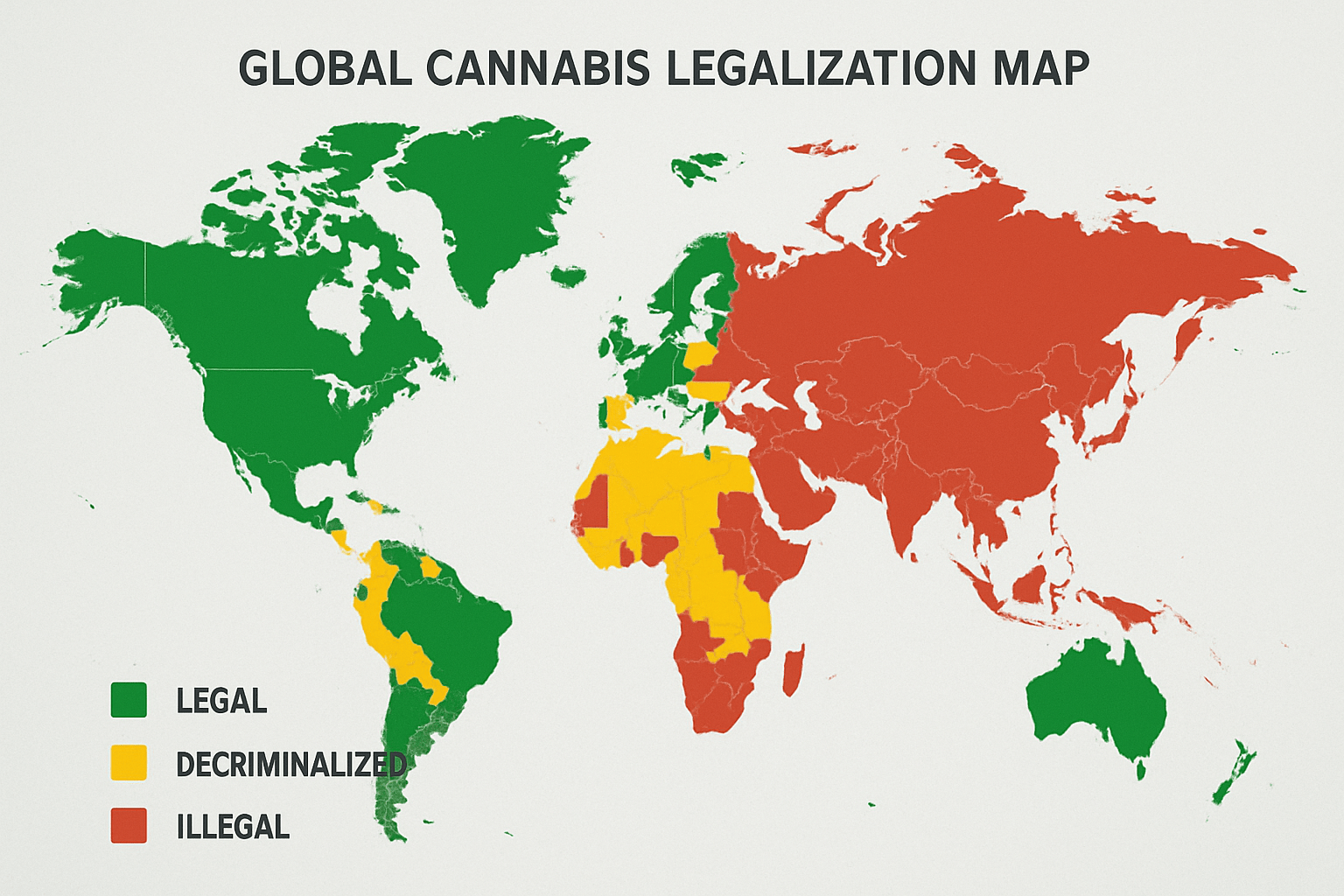
Internationally, cannabis legislation reflects a spectrum that ranges from full legalization to stringent prohibition, with many nations occupying transitional zones emphasizing medical use and restricted access. The landscape as of 2025 is particularly dynamic, with notable policymakers and advocacy groups such as Reform Remedies and Herb Horizon pushing reform dialogues centered on evidence-based regulation.
In the Americas, the United States stands out with a patchwork of state-level legalizations, intensifying efforts to integrate cannabis into mainstream commercial and agricultural sectors. The recent approval of legislation in New York to reintroduce farmer’s markets for cannabis and officially designate it as an agricultural commodity highlights a pragmatic approach fostering economic growth while ensuring regulatory oversight. Similarly, Canada and Mexico continue to enhance their regulatory frameworks for both medicinal and recreational cannabis, focusing on consumer safety and equitable market participation.
Europe is witnessing an incremental yet meaningful shift. Germany’s semi-legalization efforts permit patients to grow limited quantities at home, while the Berlin model signals emerging tolerance in urban centers. Countries like Ireland and Italy are exploring state-sanctioned medical programs, backed by growing scientific research and public demand. Intriguingly, Portugal’s drug policy reform, renowned for its comprehensive decriminalization, illustrates how shifting from punitive to health-focused approaches can yield “dramatic” improvements, including reduced adolescent use and significant decreases in drug-related harms.
Asia and Oceania present varied pictures; while some nations maintain prohibitions reflecting cultural conservatism, others like Australia are incrementally liberalizing medical cannabis laws to address unmet clinical needs. This mosaic demonstrates that although progress may be uneven, the global trajectory unmistakably trends towards normalization and control, balancing individual freedoms with public health imperatives.
| Region | Legal Status in 2025 | Noteworthy Developments | Key Stakeholders |
|---|---|---|---|
| North America | Medical & Recreational Legalization | Introduction of cannabis farmer’s markets, broad state approvals | GreenLeaf Legal, Freedom Farms |
| Europe | Mixed: Medical Programs, Decriminalization, Limited Recreational | Germany’s patient grow programs, Portugal’s drug policy success | CannaFuture, Leaf Liberty |
| South America | Decriminalization & Medicinal Use | Social club models in Argentina, Uruguay’s legalization achievements | Bud Balance, Reform Remedies |
| Asia-Pacific | Primarily Medical with Slow Liberalizations | Australia’s expanding medical access, Singapore’s strict prohibitions | Herb Horizon, Elevate Extracts |
France’s Cannabis Legislation: The Weight of Tradition and Societal Stigma
France remains entrenched in the strict policies embedded in its 1970 law, primarily designed to combat heroin trafficking rather than contemporary cannabis realities. This legislative inertia contrasts sharply with international progress, leaving patients, consumers, and businesses caught in a legal deadlock. Despite polling showing significant public support for reform, political hesitancy prevails. Social stigma around cannabis usage persists, often influenced by racial and economic biases that disproportionately penalize minority communities that consume cannabis at rates comparable to others.
Current French law prohibits production, importation, sale, and recreational consumption of THC-containing cannabis. Nonetheless, the market has barely moved on from clandestine activity — a reality that fuels powerful illegal networks and undermines public health safeguards.
Among the challenges France faces are:
- Obsolete legislation: The 1970 law lacks nuance over cannabis’s medicinal potential and controlled recreational use.
- Social inequalities: Police enforcement disproportionately targets marginalized groups, perpetuating systemic discrimination.
- Absence of a regulated supply chain: Leading to inconsistent product quality and safety risks.
- Political reluctance: Fear of electoral backlash discourages bold legislative initiatives ahead of elections.
- Limited medical cannabis access: Despite pilot programs, widespread formal prescription remains unapproved.
Many in France look toward examples like Spain’s Cannabis Social Clubs, which offer community-based, regulated access with a focus on harm reduction. Similarly, the Portuguese approach that treats drug addiction as a health issue rather than a criminal offense is cited as a model that France could consider. Industry voices such as those from Reform Remedies and Leaf Liberty advocate for an evidence-based reconsideration, pushing for reforms that integrate economic opportunity, medical innovation, and social justice.
| Aspect | Current Situation | Desired Reform |
|---|---|---|
| Legal Framework | Strict prohibition under 1970 law | Comprehensive legalization or regulated medical program |
| Social Impact | Disproportionate arrests, stigma | Social equity programs and decriminalization |
| Medical Cannabis Access | Limited pilot initiatives | Nationalized medicinal cannabis program |
| Illegal Market | Thrives with no control | Redirect supply to legal regulated channels |
| Political Will | Electoral caution prevails | Decisive leadership and public engagement |
The Socioeconomic Implications of Keeping Cannabis Illegal in France
Maintaining the current prohibitionist framework in France entails substantial missed opportunities in economic development, healthcare advancement, and social reform. The underground cannabis market not only fuels criminal organizations but also deprives the state of significant tax revenues and job creation possibilities. Countries that have legalized cannabis, such as the United States and Canada, report a flourishing cannabis economy bolstered by companies like Freedom Farms and Elevate Extracts, contributing billions to GDP and supporting thousands of jobs.
Public health considerations further complicate the debate. While cannabis is not without risks, its unregulated consumption introduces more dangers than those observed in controlled, legal environments. The prohibition paradox — prohibiting yet failing to control — contributes to unsafe products, lack of quality assurance, and limited information for consumers. Additionally, the stigmatization of users hinders engagement with prevention efforts and healthcare services, especially for those experiencing problematic use.
The following outlines key socioeconomic factors affected by cannabis legislation:
- Economic growth potential: Legal industries stimulate innovation, agriculture, retail, and tourism.
- Reduction in law enforcement costs: Redirecting resources from cannabis prosecution to more pressing criminal matters.
- Job creation: From cultivation to retail, legalization spurs employment across sectors.
- Public health improvements: Enhanced education, testing, and harm reduction measures.
- Social justice: Addressing discriminatory enforcement and expunging criminal records.
| Category | Impact of Prohibition | Advantages of Legalization |
|---|---|---|
| Economy | Tax revenue losses, black market strength | Robust regulated market, increased tax income |
| Public Safety | Unsafe unregulated products | Quality control and consumer safety |
| Law Enforcement | High incarceration and policing costs | Focus on serious crimes, reduced incarceration |
| Health Care | Limited preventive outreach | Improved education and safer consumption |
| Social Equality | Disproportionate minority targeting | Equity programs and decriminalization |
Medical Cannabis in France: Steps Toward Progress Amidst Reluctance
Unlike some neighbors who have embraced medicinal cannabis more enthusiastically, France has only recently initiated limited pilot programs aimed at exploring the therapeutic potential of cannabis. This cautious approach marks an improvement but remains insufficient compared to the growing global movement. Stakeholders such as Bud Balance and Reform Remedies are advocating for expanded patient access, increased research funding, and a solid regulatory framework to support medicinal cannabis markets.
The current pilot initiatives test both efficacy and safety, targeting conditions like chronic pain, multiple sclerosis, and certain epilepsies. Yet, the regulatory environment constrains physicians from widely prescribing cannabis-based medicines, and patients often resort to illegal sources to alleviate symptoms. The lack of clear legal pathways for medicinal cannabis undermines patient autonomy and stifles pharmaceutical innovation within the country.
The journey toward robust medical cannabis policy involves several focal points:
- Developing standardized production: To ensure consistent potency and safety of medicinal products.
- Training healthcare professionals: Providing necessary education to prescribe and monitor treatment accurately.
- Cultivating research ecosystems: Supporting clinical trials and data collection nationwide.
- Streamlining regulatory approvals: Simplifying procedures for authorizing medical cannabis use and distribution.
- Patient-centered approaches: Involving patient experiences and needs in policy-making.
| Medical Use Aspect | Current Status | Recommended Actions |
|---|---|---|
| Access | Pilot programs with limited reach | Expand nationwide availability |
| Physician Participation | Low due to regulatory uncertainty | Comprehensive training and support |
| Research | Scarce clinical data in France | Boost funding and infrastructure |
| Supply Chain | Unstable with legal constraints | Establish certified production facilities |
| Patient Advocacy | Limited involvement | More inclusive policy dialogue |
Envisioning a Future: Prospects for Cannabis Regulation Reform in France
Looking ahead, France faces a critical juncture where maintaining the outdated status quo risks international marginalization and domestic complications. However, an emerging coalition of public health experts, economic stakeholders, and social justice advocates argues for a pragmatic transition towards regulated legalization. This shift would encompass:
- Legal production and distribution comprehensive framework: Ensuring control, quality, and accountability.
- Public education campaigns: Promoting responsible use and reducing stigma, especially among youth.
- Addressing social inequities: Implementing reparative programs targeting communities disproportionately affected by past policies.
- Economic integration: Encouraging entrepreneurship and innovations aligned with sustainable practices.
- Policy harmonization: Aligning reforms with broader European trends to facilitate market and research cooperation, as described in analyses of the European cannabis market.
This vision also anticipates the phased suppression of illicit markets, redirecting resources towards enforcement against hazardous substances and criminal activities unrelated to cannabis. The involvement of private enterprises like Past to Pot and Freedom Farms showcasing sustainable cultivation practices underscores a genuine readiness for transformation.
| Reform Component | Expected Benefit | Implementation Challenges |
|---|---|---|
| Regulated Market | Consumer safety, tax revenue, market stability | Political resistance, regulatory development time |
| Social Equity Programs | Reduced incarceration, social healing | Identifying affected communities, funding |
| Public Health Initiatives | Responsible consumption, youth protection | Effective messaging, cultural change |
| International Alignment | Cross-border cooperation and innovation | Diverse national policies, legal harmonization |
| Economic Development | Job creation, local entrepreneurship growth | Market competition, quality control |


Post Comment