United States: Introduction of the Marijuana Justice Act in the House of Representatives

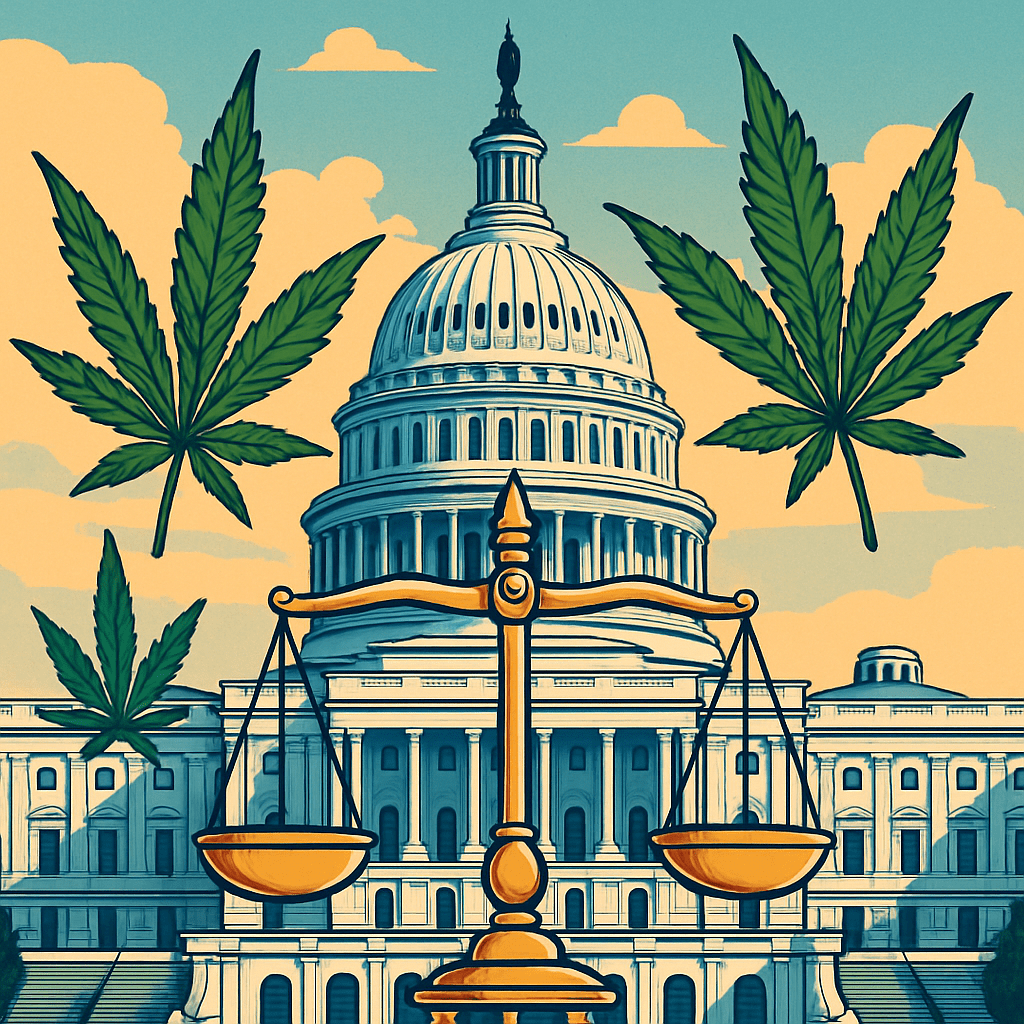
The United States has witnessed a significant shift in cannabis legislation in recent years, reflecting a growing recognition of the need to address the consequences of decades of prohibition and racial disparities in drug enforcement. The introduction of the Marijuana Justice Act in the House of Representatives marks a pivotal moment, challenging federal prohibitions and proposing a comprehensive reform aimed at ending the inequities fostered by the War on Drugs. This federal cannabis bill, spearheaded by lawmakers such as Representatives Barbara Lee and Ro Khanna alongside Senator Cory Booker in the Senate, heralds a new chapter in marijuana reform.
This landmark legislation seeks not only to deschedule cannabis from the Controlled Substances Act but also to reinvest in communities disproportionately damaged by past drug policies. With twelve sponsors on its first day in the House, the Marijuana Justice Act exemplifies a broader push by lawmakers to dismantle systemic injustices in criminal justice and promote cannabis decriminalization nationwide. As enforcement policies have fluctuated—including controversial decisions such as former Attorney General Jeff Sessions’ rollback of federal protections—the current bill offers a comprehensive federal cannabis framework that aligns with evolving public opinion and state-level reforms.
The debate surrounding this bill unfolds amidst vigorous advocacy for social equity in marijuana enterprises and a surge in public support reflected in numerous polls. This article explores the cascading implications of the Marijuana Justice Act’s introduction, the complex legislative path ahead, and the multifaceted intersection of drug policy, criminal justice reform, and economic opportunity within the cannabis sector.
Impact of the Marijuana Justice Act on Federal Cannabis Legislation and State Sovereignty
The Marijuana Justice Act aims to fundamentally alter federal cannabis legislation by removing marijuana from the list of controlled substances under the Controlled Substances Act. This bold reform would end the federal prohibition, enabling each state within the United States to independently regulate cannabis according to local preferences and needs. States can choose to maintain prohibition or embrace legalization and decriminalization, shifting the paradigm from federal control to state sovereignty.
The federal government’s relinquishment of authority over cannabis policy addresses long-standing tension between federal law and state experimentation. For example, states such as California, Colorado, and New York have established diverse regulatory frameworks ranging from medical marijuana programs to full recreational legalization. Yet, the persistent federal prohibition created legal ambiguities affecting businesses, banking, and criminal justice outcomes.
Under the Act, the federal government would:
- Delist cannabis as a controlled substance, eliminating prohibition at the federal level.
- Authorize states to set their own cannabis policies without risk of federal intervention.
- Incentivize reforms through federal funding directed toward states with disproportionate criminal enforcement affecting low-income communities and people of color.
These provisions acknowledge that although cannabis may not become universally legal, federal support would encourage legislative reform where current laws perpetuate systemic inequalities. Research has consistently demonstrated that minority populations face disproportionate rates of marijuana arrests and incarcerations, regardless of the state’s legal status of cannabis.
The Marijuana Justice Act embodies a nuanced approach to marijuana reform, balancing decentralization with targeted federal intervention aimed at rectifying past injustices.
| Aspect | Pre-Act Status | Post-Act Change |
|---|---|---|
| Federal Classification of Cannabis | Schedule I Controlled Substance | Removed from Controlled Substances Act |
| State Autonomy | Limited by Federal Law | States empowered to regulate without federal interference |
| Federal Funding Allocation | Minimal or No Targeted Funding | Funds incentivize reform in states with disproportionate enforcement |
Ultimately, the Act’s emphasis on state sovereignty coupled with strategic federal support aims to recalibrate the balance between national consistency and local autonomy in cannabis policy. This is especially vital as many states continue to navigate the complexities of legalization in varying stages and scopes.
Addressing Social Equity and Criminal Justice Reform through the Marijuana Justice Act
Central to the Marijuana Justice Act is its explicit focus on repairing the harm caused by the War on Drugs, particularly the widespread racial injustices embedded in cannabis prohibition enforcement. This legislation seeks to go beyond mere legalization and tackles the systemic inequities affecting marginalized communities through thoughtful criminal justice reform and social equity initiatives.
The Act mandates the expungement of prior cannabis-related convictions at the federal level, providing relief to countless individuals whose lives have been irreparably affected by criminal records. This step is critical in improving access to employment, housing, and education for formerly convicted persons.
Additionally, the Act establishes a dedicated fund to support communities most impacted by decades of disproportionate drug enforcement. These funds aim to:
- Support economic development and job creation in affected neighborhoods.
- Facilitate access to healthcare and substance abuse treatment services.
- Provide grants and technical assistance to social equity cannabis businesses burdened by high loan costs and regulatory barriers, as described in recent advocacy efforts by lawmakers in places like New York.
As lawmakers and activist groups push for more inclusive cannabis industries, the Marijuana Justice Act underscores the need for federal resources to ensure that communities historically persecuted have opportunities within the new legal landscape. This vision aligns closely with recent moves to create social equity enterprises designed to overcome challenges such as access to capital and business licensing.
By integrating criminal justice reform with economic reinvestment, the Act represents a holistic approach that not only ends prohibition but seeks to heal communities fractured by decades of punitive policies.
| Program Area | Purpose | Expected Outcome |
|---|---|---|
| Expungement Programs | Clear federal cannabis convictions | Remove barriers for employment and education |
| Community Reinvestment Fund | Support communities impacted by War on Drugs | Economic revitalization and access to care |
| Social Equity Business Grants | Assist minority-owned cannabis businesses | Increased access to capital and market participation |
Notably, these efforts contribute to reducing incarceration rates and addressing long-term economic disparities resulting from discriminatory cannabis laws. The Act’s provisions have been heralded as an essential advancement in the United States’ broader movement toward just and equitable drug policy reform.
The Legislative Challenges and Political Landscape Surrounding the Marijuana Justice Act
The Marijuana Justice Act faces a complex congressional journey, emblematic of the broader political dynamics influencing cannabis legislation in the United States. While initial support is promising, with twelve cosponsors on the House side and a companion bill in the Senate, the bill must navigate both chambers of Congress amidst divergent views on drug policy.
Jeff Sessions’ previous federal stance complicates the environment. His revocation of protections that had previously allowed states more freedom in managing cannabis issues created a regulatory setback now being challenged by the Act. The federal cannabis bill symbolizes a direct response to such policies, representing a tug-of-war between federal authority and state initiatives.
Key challenges include:
- Partisan divisions: Marijuana reform remains a contentious issue, with conservative factions often resisting federal legalization despite growing public support.
- Committee milestones: The bill must pass several congressional committees, where members weigh the potential social and economic impacts.
- Lobbying pressures: Both pro-legalization advocates and pharmaceutical or law enforcement lobbies exert influence on lawmakers.
- State interactions: States affected differently by federal policies may lobby for or against provisions depending on their existing laws and economic interests.
Despite uncertainty, the momentum is driven by shifting public opinion — recent polls reveal broad bipartisan support for cannabis legalization, even among traditionally conservative voters. Lawmakers from progressive and moderate districts are increasingly prioritizing reform, viewing the Marijuana Justice Act as a step toward remedying decades of injustices and crafting equitable drug policy.
| Stage | Challenges | Opportunities |
|---|---|---|
| House Committee Review | Political resistance, ideological divisions | Building bipartisan coalitions |
| Senate Consideration | Potential filibuster or delay tactics | Leverage public opinion and advocacy pressure |
| Presidential Approval | Executive policy priorities | Alignment with broader justice reform agenda |
This legislative landscape requires persistent advocacy and dialogue between diverse stakeholders. Observers keenly watch as states mobilize to defend their interests amid shifting federal policies, fostering a dynamic interplay often described as a cat-and-mouse game between federal and state authorities.
Economic and Social Implications of Cannabis Decriminalization under the Marijuana Justice Act
Should the Marijuana Justice Act become law, the decriminalization and potential legalization of cannabis would catalyze significant economic and social transformations across the United States. This federal cannabis bill promises not only regulatory relief but also opportunities for new business ventures, public health advancements, and criminal justice reform.
Economic effects would manifest in various sectors, including:
- Expansion of legal cannabis markets: Growth of licensed producers, distributors, and retailers benefiting from federal protections.
- Job creation: New employment opportunities in cultivation, manufacturing, research, and retail services.
- Investment and banking: Access to financial services previously unavailable due to cannabis’ federal illegality, reducing risks and enabling growth.
- Tax revenue: Increased state and local government income supporting public services.
Socially, the act’s focus on equity would help redress disproportionate harms to minority and low-income populations, advancing community development and reducing social stigma. More broadly, reduced incarceration rates translate into fewer families disrupted by drug-related convictions, with positive ripple effects on education and community cohesion.
The marijuana reform facilitated by this bill also intersects with ongoing policy debates around medical cannabis use, employer regulations, and law enforcement training.
| Impact Area | Pre-Act Challenges | Projected Outcomes Post-Act |
|---|---|---|
| Economic Growth | Limited access to banking and federal markets | Robust cannabis industry growth and investment |
| Social Equity | High incarceration and employment barriers | Improved opportunities and reduced disparities |
| Public Health | Uneven access to medical cannabis and treatment | Enhanced healthcare services and research support |
The ripple effects extend beyond the cannabis industry into sectors such as agriculture and manufacturing, particularly in states like New York that have recently legislated to include cannabis farmers markets and define cannabis as an agricultural commodity.
In summary, the Marijuana Justice Act contains the potential to reshape economic landscapes and social frameworks, combining legalization with measures for justice and equity.
Public Opinion, Advocacy, and Future Prospects for Marijuana Reform in the United States
Public sentiment has played a critical role in the emergence and progress of the Marijuana Justice Act. Recent polling indicates that support for marijuana legalization in the United States has grown to a broad bipartisan consensus, underscoring a cultural and political shift. This groundswell has enhanced the prospects for cannabis decriminalization and reform bills at both federal and state levels.
Advocacy groups, lawmakers, and business leaders increasingly collaborate to promote social equity, reduce regulatory burdens, and protect patient rights. For example, ongoing efforts include:
- Campaigns to expunge past cannabis convictions and restore civil rights.
- Promotion of marijuana social equity enterprises challenged by financial obstacles.
- Calls for expedited judicial review of cannabis rescheduling petitions, as urged by the Department of Justice.
- Coordination between states to harmonize medical marijuana policies, highlighted in recent legal challenges such as Nebraska’s Supreme Court evaluation of voter-approved legislation.
Despite hurdles, the alignment between public opinion and legislative initiatives grows stronger. The Biden administration has acknowledged wrongful imprisonment cases related to medical marijuana, reflecting a broader commitment to reform. Meanwhile, stories of voters in conservative regions endorsing legalization—for example, Tennessee’s nearly two-thirds support—signal the deepening penetration of reform ideals across the political spectrum.
| Factor | Details | Influence on Reform Movement |
|---|---|---|
| Polls | Strong bipartisan support across demographics | Increases legislative momentum and pressure |
| Advocacy Efforts | Focus on social equity and expungement | Shapes bill provisions and public discourse |
| Judicial Actions | Expedited cases on cannabis rescheduling | Accelerates policy implementation |
| State-Level Coordination | Voter-approved reforms and legal challenges | Enhances regulatory coherence |
As lawmakers continue to pursue the Marijuana Justice Act, the evolving landscape of public attitudes and advocacy alliances ensures that marijuana reform remains a central issue in America’s drug policy discourse.


Post Comment