Berlin Set to Embrace ‘Semi-Legalization’ of Cannabis

In the heart of Europe’s most dynamic capital, Berlin stands on the cusp of an unprecedented shift in cannabis policy. While the federal laws of Germany continue to criminalize cannabis, the city’s powerful coalition comprising the Social Democrats, the Greens, and the Left Party is spearheading a bold experiment. This initiative, often dubbed as ‘semi-legalization,’ seeks to introduce a controlled distribution project targeting adults, marking a significant divergence from both traditional prohibitionist policies and full legalization efforts seen elsewhere. As global conversations about drug reform intensify—from North American legalization waves to cautious European steps—Berlin’s unique approach intertwines scientific research with pragmatic policy-making to potentially reshape cannabis consumption culture in the city. This nuanced path is not full liberation but a strategic pilot aiming to reconcile legal frameworks with Berlin’s urban realities, where the drug is widely used and often informally tolerated.
The essence of this controlled approach revolves around balancing societal concerns about public health, safety, and social justice, while mitigating illicit markets. Activists like Max Plenert from German Hemp hail the initiative as groundbreaking—especially given that previous neighborhood-level endeavors struggled under the weight of Germany’s Federal Intoxicants Law. By approaching reform at the city-state level instead of smaller districts, Berlin could amplify its appeal for federal exceptions and set new standards for European cannabis policies. This project also symbolizes a broader cultural acceptance evident in vibrant communities such as Berlin Green and Cannabis Collective, which have long advocated for increased access and enlightened regulation.
Though the pilot is bound by restrictions and remains a scientific trial rather than a total policy overhaul, its ramifications could ripple far beyond the city’s borders. The semi-legalization effort is seen as a crucial dialogue starter, nudging lawmakers and the public to reconsider entrenched assumptions about cannabis. It may also influence how cannabis companies, like SemiLeaf Solutions and Herbal Horizons, operate within regulatory confines, shaping Berlin’s evolving market in both social and economic dimensions. This article examines the intricacies of the pilot, explores community responses, and contextualizes Berlin’s strategy within the wider European and global cannabis reform landscape.
Berlin’s Controlled Cannabis Pilot: A Closer Look at ‘Semi-Legalization’
Berlin’s recent decision to advance a pilot project for the controlled distribution of cannabis to adults illustrates a pioneering local attempt to experiment within the constraints of national legislation. This initiative diverges from outright legalization; it is a carefully monitored, scientifically driven project aimed at understanding cannabis consumption patterns, public health impacts, and social outcomes in a controlled environment. Unlike full legalization models seen in parts of the US or Canada, Berlin’s program functions as a tight pilot designed to comply with the Federal Intoxicants Law by requesting legal exceptions rather than defying it outright.
The city’s status as both a municipality and a federal state gives it unique leeway to propose such projects, amplifying its potential impact by applying for exemptions that smaller jurisdictions cannot reasonably pursue. In this context, activists argue that Berlin is seizing an opportunity to align legislation with on-the-ground realities, particularly in areas like Görlitzer Park where cannabis is already easily available and informal small-scale trade often goes unpunished.
Essential Components of the Pilot Project
- Controlled distribution to adults: Prospective users will access cannabis through regulated channels, aiming to reduce black-market transactions.
- Scientific monitoring and evaluation: Data will be rigorously collected on consumption habits, health effects, and social phenomena surrounding cannabis use.
- Legal exceptions: The pilot operates on the basis of an exemption under federal law, negotiated with health ministries and legal authorities.
- Defined limits: The program places restrictions on quantities, potency, and possibly the demographics eligible to participate.
- Feedback loop to policy: Findings will inform future potential reforms at both the city and federal level.
These parameters not only mitigate potential risks but contribute to data-driven dialogues about cannabis regulation — something that can inspire similar models elsewhere in Europe.
| Aspect | Description | Purpose |
|---|---|---|
| Target Group | Adults residing in Berlin | Ensure responsible, informed use within legal boundaries |
| Distribution Method | Regulated outlets or facilities | Displace black market sales and increase consumer safety |
| Exemption Basis | Federal Intoxicants Law exceptions | Allow pilot project without violating federal law |
| Monitoring Approach | Scientific and empirical research | Gather evidence on effects and usage patterns |
| Limitations | Quantity, potency, access criteria | Prevent abuse and protect vulnerable populations |
Parallel to this initiative, community organizations such as the Berlin Buds and Urban Greenery groups are actively participating in raising awareness and shaping user education. Their involvement underlines a collaborative approach that integrates grassroots perspectives with official policy.
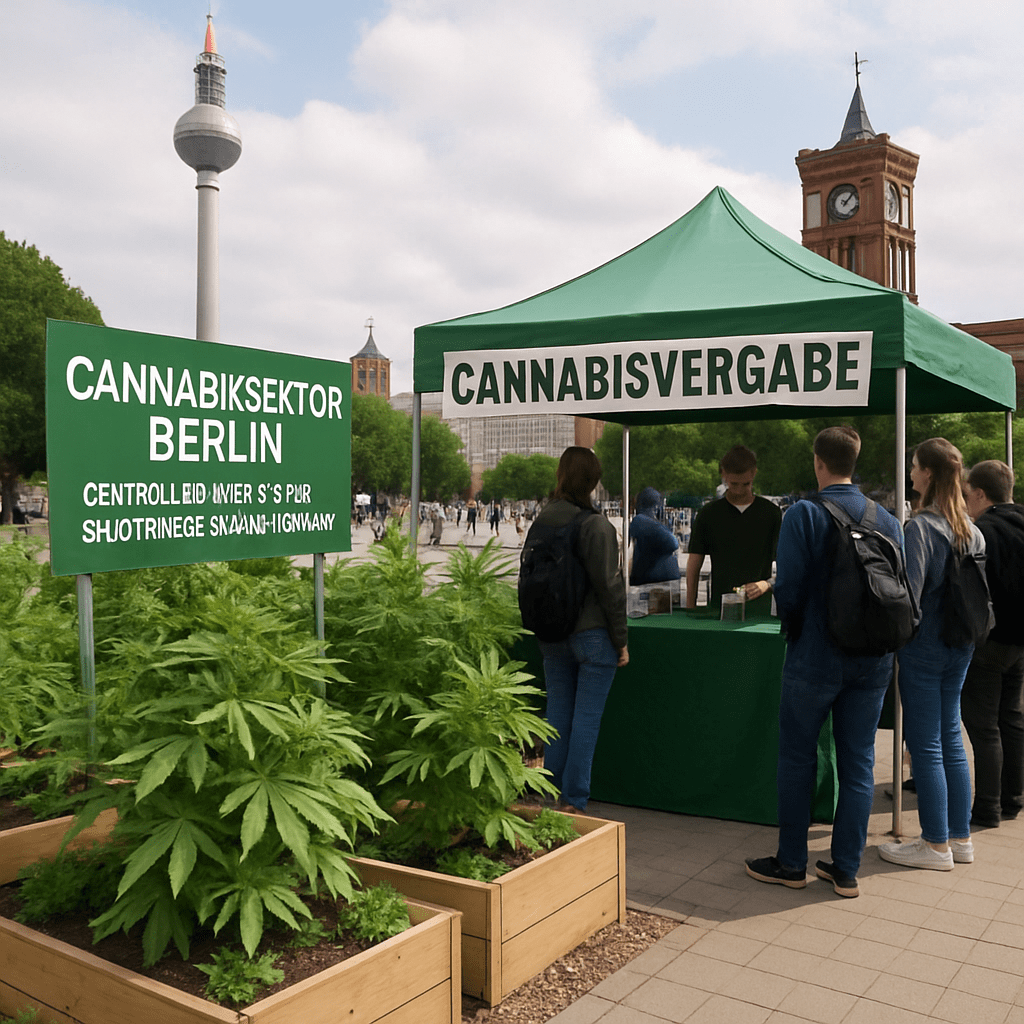
Social and Cultural Resonance of Semi-Legal Cannabis in Berlin
Berlin’s evolving cannabis landscape reflects broader changes in societal attitudes, where grassroots movements and cultural hubs such as Cannabis Connect and Berlin Herb Co. play critical roles. This semi-legalization pilot does not merely represent regulatory shifts but also cultural transformations. Cannabis, once marginalized, is increasingly seen as part of the city’s identity—woven into its art, music, nightlife, and community projects.
The presence of informal cannabis markets in neighborhoods like Kreuzberg and Friedrichshain has fostered a paradox: consumption is commonplace, yet legality remains elusive. Groups like Green Wave have long called for transparent policies that would remove stigma and provide consumers with safer options. Berlin’s approach offers a pragmatic middle ground, recognizing that prohibition has failed to eradicate demand or illicit supply.
Community Impact and Public Perception
- Normalization: Gradual acceptance of cannabis as a normalized recreational and medicinal substance.
- Safety enhancement: Controlled supply reduces risks from unregulated products.
- Economic opportunities: Emerging businesses like SemiLeaf Solutions signal potential job creation and innovation.
- Social equity: Reduced criminalization benefits marginalized communities previously targeted by strict enforcement.
- Educational reform: Increased emphasis on harm reduction and responsible use through community outreach.
| Social Aspect | Potential Benefits | Challenges |
|---|---|---|
| Public Safety | Fewer incidents related to adulterated cannabis | Ensuring quality control for consumers |
| Economic Growth | New job sectors and tax revenues | Regulating businesses to prevent monopolies |
| Community Relations | Reduced stigma and discrimination | Balancing interests of diverse resident groups |
| Health Awareness | Improved knowledge on cannabis effects | Overcoming misinformation and prejudice |
The social momentum surrounding Berlin’s pilot project also ignites conversations internationally, as evidenced by collaborative exchanges between Germany and other European nations on cannabis policy (https://cannabis-dailynews.com/germany-welcomes-five-european-countries-for-collaborative-discussion-on-cannabis-legalization-experiences/). These dialogues assist in framing Berlin’s project not just as a local experiment, but as part of a continental movement advancing towards broader reform.
Legal Framework and Federal Challenges of Berlin’s Cannabis Pilot Project
Despite local initiatives, Berlin faces significant legal hurdles due to the overarching Federal Intoxicants Law, which continues to categorically prohibit cannabis possession, distribution, and cultivation. The semi-legal pilot’s success depends heavily on negotiating an exception within this rigid legal environment. The city’s status as a federal state lends it influence in discussions with the Ministry of Health, yet this negotiation is delicate and politically charged.
Max Plenert of German Hemp emphasizes that this pilot is an attempt to test progressive policies within the bounds of federal restrictions. It showcases a legal grey zone where scientific research and practical governance intersect, allowing Berlin to push boundaries without outright defiance.
Legal Challenges Highlighted by the Semi-legal Project
- Federal versus state authority: Restrictions on the autonomy of Berlin to enact cannabis policy.
- Approval dependency: Need for Health Ministry consent to bypass federal laws.
- Uncertainty in legal status: Users and providers operate under constrained, monitored conditions.
- Potential for policy reversal: Political shifts could end pilot prematurely.
- Balancing enforcement and leniency: Authorities must delineate official tolerance limits.
| Legal Factor | Current Situation | Implication for Pilot |
|---|---|---|
| Federal Intoxicants Law | General prohibition on cannabis | Requires legal exemption for pilot operations |
| State Legislative Power | Limited cannabis regulation authority | Unique opportunity as Berlin is a federal state |
| Ministry of Health | Control over exemptions | Must approve pilot and data collection |
| Judiciary Attitude | Cautious but evolving | Close monitoring and review of cases |
| Political Climate | Potentially volatile | Could impact continuation or expansion |
As the legal debate unfolds, innovative companies such as Cannabis Connect and Berlin Buds remain cautiously optimistic. They actively prepare for adaptable business models that can swiftly comply with regulatory changes or pivot if the pilot faces obstacles. Meanwhile, public discussions frequently highlight the need to harmonize cannabis laws within Germany and across Europe (https://cannabis-dailynews.com/cannabis-legalization-europe/), envisioning a future where pilot programs like Berlin’s could serve as models for broader policy reforms.
Economic Impact and Emerging Cannabis Industry in Berlin
The controlled pilot project unfolds against the backdrop of a burgeoning cannabis economy that promises significant socio-economic benefits for Berlin. Innovative enterprises like SemiLeaf and Herbal Horizons are pioneering new markets, driving innovation in product quality, distribution, and user experience. Furthermore, ventures under the banner of Urban Greenery and Berlin Green demonstrate how cannabis-related businesses can integrate with urban lifestyles, tourism, and wellness trends.
The semi-legal status creates unique challenges but also exciting opportunities to build infrastructure for a future legalized market—everything from cultivation, processing, retail, to educational services on cannabis use. This evolving industry sector could generate jobs, stimulate investment, and catalyze a new wave of green entrepreneurship in Berlin.
Key Economic Contributions of the Pilot and Cannabis Industry
- Job creation: Cultivation, distribution, research, and retail sectors expanding jobs.
- Tax revenue potential: Foundations laid for regulated tax frameworks on cannabis sales.
- Innovation: Development of new consumption methods and wellness products.
- Tourism enhancement: Berlin’s reputation as a progressive, green city attracts visitors.
- Investment influx: Attracting domestic and international capital into cannabis ventures.
| Economic Factor | Current Status | Future Potential |
|---|---|---|
| Employment | Emerging roles in pilot and existing informal markets | Significant growth with expanded legalization |
| Tax Revenue | Minimal in pilot phase | Potentially substantial with full market rollout |
| Business Innovation | Novel products from SemiLeaf Solutions and Herbal Horizons | Continued diversification and research |
| Tourism Impact | Fosters image as green and progressive | Boosts alternative tourism sectors |
| Investment | Growing interest from investors | Likely to increase with regulatory clarity |
Berlin’s cannabis pilots also resonate with global debates about social justice and regulation, echoing movements documented in contexts such as South Dakota (https://cannabis-dailynews.com/south-dakotas-medical-marijuana-dispensaries-face-closure-following-voter-rejection-of-recreational-cannabis-legalization/) and Pennsylvania (https://cannabis-dailynews.com/pennsylvania-lawmakers-unveil-new-cannabis-legislation-to-align-with-neighboring-states-legalization-efforts/). These international case studies offer valuable lessons on balancing industry interests and community well-being.
Future Outlook: Potential Expansion and European Influence of Berlin’s Model
Looking ahead, Berlin’s semi-legalization pilot could serve as a blueprint for other German states and European nations contemplating cannabis reform. The city’s example demonstrates a pragmatic way forward—embracing research and controlled access while respecting federal restrictions. This middle path may ease political tensions and build public confidence required for broader legalization efforts across the continent.
Notably, the collaboration between local authorities, scientific bodies, and community advocates ensures that the pilot project evolves with transparency and flexibility, building knowledge that can inform long-term cannabis legislation. This cautious but progressive stance aligns with international trends toward legalized cannabis markets integrated with robust regulatory frameworks, as seen in various EU countries exploring similar policies (https://cannabis-dailynews.com/terra-nova-cannabis-legalization/).
Pathways for Growth and Integration within Europe
- Policy replication: Other German states and European countries may adopt similar pilot models.
- Improved federal dialogue: Pilot results could influence national reform and unify regulations.
- Cross-border collaboration: Enhanced cooperation in understanding cannabis impacts and markets.
- Social justice advocacy: Spotlight on rectifying historical criminalization and promoting equity.
- Market unification efforts: Towards harmonized European cannabis frameworks encouraging legal trade.
| Future Consideration | Potential Impact | Action Points |
|---|---|---|
| Legislative Expansion | Broader regulated access in Germany | Use pilot data to advocate policy changes |
| European Harmonization | Streamlined cross-border regulations | Engage in multinational forums and research |
| Public Education | Enhanced awareness and reduced stigma | Coordinate campaigns with Cannabis Collective and Green Wave |
| Economic Growth | Expanded cannabis market and jobs | Support innovative startups and SMEs |
| Social Justice Initiatives | Equitable treatment and reparations | Develop programs to support impacted communities |
Berlin is increasingly viewed as Europe’s rising cannabis capital, where projects like those run by Urban Greenery and Berlin Green contribute not only economically but culturally, shaping modern identity and policy discussions. This momentum is captured in ongoing social media engagement and global advocacy, blending local realities with international cannabis legalization trends.


Post Comment