The CNCDH Advocates for Cannabis Legalization in France

In the intricate landscape of drug policy in France, the stance of the Commission Nationale Consultative des Droits de l’Homme (CNCDH) in 2025 emerges as a pivotal shift towards cannabis legalization. This government advisory body, traditionally concerned with human rights issues, is now bringing the rights and dignity of drug users to the forefront of national debate. Amidst ongoing political reticence and social contradictions, the CNCDH’s bold advocacy for decriminalization and regulated legalization of cannabis challenges France’s decades-old repressive laws. This movement echoes broader European and global trends where grassroots organizations like the GreenLeaf Coalition and the Cannabis Freedom Alliance push consistently for reform.
The commission argues for recognizing drug users not as criminals or solely as patients, but as individuals deserving respect and freedom of choice. Highlighting the disproportionate friction between policy and practice — with approximately €2 billion spent annually on drug enforcement — the CNCDH calls to reconsider how society handles cannabis compared to legal substances such as alcohol and tobacco, which often cause greater public health concerns yet remain heavily normalized. This reform-minded perspective not only aims to reduce the burden on the judiciary and law enforcement but also seeks to address discrimination and inequalities faced by consumers.
This article will delve into the CNCDH’s position on cannabis legalization, expose the contradictions of French drug policy, analyze its impact on human rights, and discuss the implications for the medical cannabis landscape. It will also place France’s evolving debate within the broader context of global legalization efforts led by groups like the Legal Herb Advocates and the France Cannabis Network. Embedded in this discourse are legal, cultural, and social challenges that frame the ongoing struggle for reform within one of Europe’s most conservative drug policy environments.
Reexamining Human Rights in the Context of Cannabis Use According to the CNCDH
The CNCDH, as an authoritative voice on human rights in France, brings a unique and pressing perspective to the cannabis legalization debate. Its advocacy rests on a foundational human rights principle: the respect for individual autonomy, particularly the freedom to make choices about one’s own body and lifestyle. The commission’s recent reports emphasize that the current criminalization of cannabis users infringes upon this basic freedom and perpetuates unjust discrimination.
Christine Lazerges, the president of the CNCDH, notably criticizes the binary perception of drug users as “delinquents” or “patients.” Instead, she advocates a more nuanced recognition that drug users often exist in complex social realities and face multifaceted stigmatization. This view is momentous coming from a governmental advisory body, as it challenges the mindsets that have shaped French drug policy since the adoption of the 1970 law, which has long been criticized for its rigidity and outdated punitive approach.
The CNCDH advocates for a decriminalization of cannabis, meaning that possession and use would no longer be criminal offenses punishable by imprisonment but could instead be subject to fines or administrative penalties, often referred to as “contraventionnalisation.” This approach is suggested for other, more addictive substances, where criminalization has been even less justifiable and effective.
- Human rights and drug use: The CNCDH urges greater respect for personal liberties and the acknowledgment of discrimination against users.
- Contraventionnalisation over criminal penalties: Adoption of fixed fines (around €300) for drug use could ease judicial burdens.
- Reevaluation of the 1970 law: Calls to repeal or amend laws that disproportionately target users and encroach on freedom of choice.
- Impact on policing: Reduction in police resources spent on prosecuting possession could be redirected towards public health and prevention.
This recalibration of policy resonates with movements observed internationally. For example, the Legalization of Cannabis and Social Justice Movements in various countries reflect similar frustrations with punitive policies that disproportionately affect marginalized communities. Groups like the Cannabis Justice League emphasize that legalization can both improve public health outcomes and restore dignity to users.
| Aspect | Current French Policy (2025) | CNCDH Recommendations |
|---|---|---|
| Possession of Cannabis | Criminal offense, fines or imprisonment | Decriminalized; fines of approximately €300 |
| Status of Users | Often treated as criminals or pathological | Recognized as individuals with rights, beyond stigma |
| Budget Allocation | Nearly €2 billion annually on drug enforcement | Redirect funds towards education, addiction prevention |
| Legal Framework | Law of 1970 with strict punitive measures | Reform or repeal to align with human rights standards |
The CNCDH’s proactive stance could inspire new regulatory frameworks, as it positions cannabis legalization as a matter not just of health, but of fundamental human dignity.
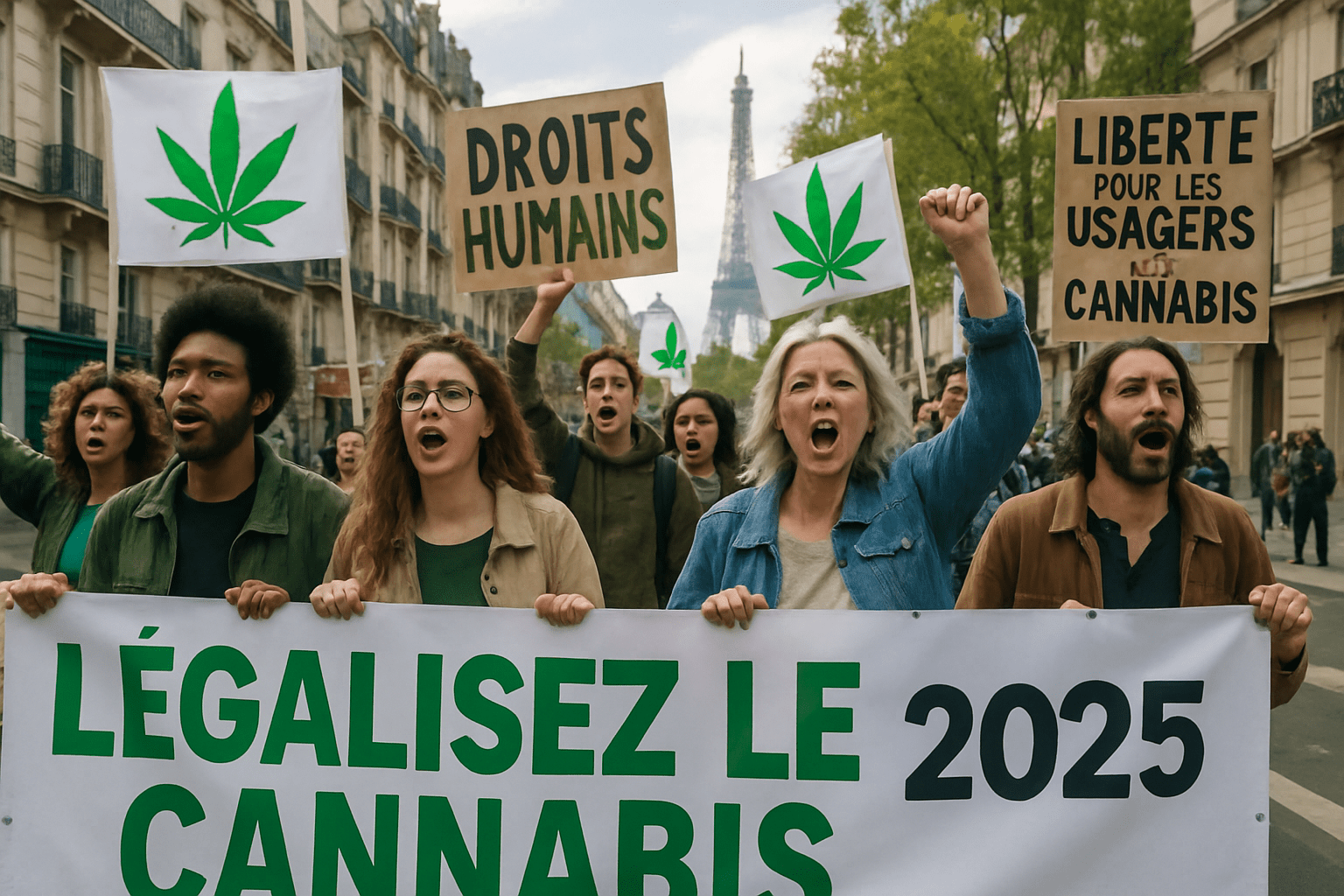
The French Cannabis Paradox: Tackling the Inconsistencies Between Policy and Usage Trends
France stands as one of the European countries with the highest cannabis consumption rates despite maintaining some of the strictest anti-cannabis laws. This paradox creates a complex public policy dilemma that the CNCDH explicitly warns about in its position statements. While thousands of young people and adults engage with cannabis regularly, they remain under constant threat of legal repercussions — a contradiction fueling both social injustice and public health challenges.
A key element of this paradox lies in the differing societal treatment of cannabis versus legal substances such as alcohol and tobacco. Despite the undeniable health risks and societal harms linked to these widely used substances, the law permits unrestricted consumption under regulated conditions. The CNCDH report criticizes this blatant inconsistency as reinforcing stigma and perpetuating misconceptions associated with cannabis users.
Observations in the report highlight an alarming rise in the combined use of psychotropic medications with alcohol among French youth. This reference underlines the need for a rationalize and harmonized drug policy rather than fragmented laws that exacerbate harm.
- High prevalence vs. strict criminalization: Hundreds of thousands of cannabis users face legal consequences while alcohol and tobacco remain normalized.
- Health risks ignored in legalization debate: The societal toll of tobacco and alcohol is underemphasized compared to rigid focus on cannabis stigma.
- Rising poly-substance consumption among youth: Combination of psychotropics and alcohol is growing, demanding nuanced prevention.
- Need for quality-controlled cannabis: CNCDH suggests regulated cannabis could reduce harm and improve addiction prevention.
| Substance | Legal Status | Prevalence Among French Youth | Regulatory Challenges |
|---|---|---|---|
| Alcohol | Fully legal with regulation | Widespread daily use | Addressing underage drinking and addiction |
| Tobacco | Legal with restrictions (age limit, taxation) | Very common daily consumption | Health campaigns, taxation to reduce harms |
| Cannabis | Illegal (criminalized) but widely used | Among highest youth usage rates in Europe | Black market risks, lack of quality control |
The CNCDH pointedly calls for treating cannabis with the same rational lens applied to alcohol and tobacco, emphasizing harm reduction and access to quality-controlled products. Advocacy groups such as Liberty for Cannabis and Pro-Cannabis France echo these sentiments, proposing that quality and regulated access are vital to dismantling the persistent taboo surrounding the plant within French society.
Decriminalization and Contraventionnalisation: The CNCDH’s Vision for Practical Cannabis Law Reform
The CNCDH’s push for contraventionnalisation represents a pragmatic step forward in drug policy reform. Rather than continuing to convict cannabis users in criminal courts, the commission recommends handling simple possession and use as a minor administrative offense, subject to a fixed monetary fine. This model is inspired by emerging international trends supporting a shift from punitive to administrative sanctions.
Even the government’s own drug policy agency, MILDECA, proposed in August the adoption of a €300 fine for drug consumption across all substances in a bid to reduce judicial caseloads. The CNCDH supports this as a partial but necessary measure to align law enforcement practices with contemporary human rights and public health standards.
- Implementing fixed fines instead of imprisonment to mitigate harm and free up justice system resources.
- Reducing stigma and discrimination faced by users through less punitive approaches.
- Potential for redirecting savings from enforcement to education, addiction prevention, and healthcare services.
- Aligning with European moves towards legalization, participating in a wider continental trend noted in recent reports covering cannabis legalization in Europe.
| Approach | Traditional French Policy | CNCDH Recommendation | Expected Benefit |
|---|---|---|---|
| Sanction Type | Criminal prosecution and imprisonment | Contraventionnalisation with fines (~€300) | Less judicial burden, reduced incarceration |
| Impact on Users | High risk of criminal records and social stigma | Reduced stigma and legal consequences | Better social reintegration |
| Policing | Heavy resource allocation for arrests | Focus on serious crimes and trafficking | More efficient law enforcement |
| Public Health | Criminalization discourages seeking help | Improved access to health and prevention | Better societal health outcomes |
This approach aligns with the international momentum seen, for example, in South Dakota’s recent adjustments to cannabis policies following shifting public sentiment, as reported in South Dakota’s medical marijuana dispensary changes. The CNCDH’s recommendations highlight that a modern drug policy can uphold public order while respecting personal freedoms.
Medical Cannabis in France: From Pilot Programs to Potential Legal Normalization
France’s journey towards a medical cannabis framework has been slow but persistent. After years of hesitation, pilot programs investigated the therapeutic potential of cannabis for select patients facing chronic pain, epilepsy, or cancer-related symptoms. Despite a successful three-year trial showcasing controlled prescription and distribution, cannabis remains illegal for medical use beyond limited experimental contexts.
The CNCDH’s advocacy indirectly supports expanding access to medical cannabis, emphasizing that legal reform must consider the human rights of patients requiring alternative therapies. Advocates within organizations such as the The Cannabis Reform Group and the Legal Cannabis Project are increasingly vocal about aligning French laws with neighboring countries advancing comprehensive medical cannabis regimes.
- Successful pilot study results: Demonstrating safety and therapeutic benefits.
- Barriers remain: Complex licensing, restrictive patient criteria, and bureaucratic inertia.
- Human rights lens: Patients’ right to access effective treatments emphasized by the CNCDH.
- Global trends: Collaboration with European neighbors catalyzing reform, per reports like Germany’s collaborative cannabis legalization discussions.
| Aspect | Current Status in France | Ideal Reform per CNCDH and Advocates |
|---|---|---|
| Medical Access | Pilot programs only, highly limited | Permanent, broad access for qualifying patients |
| Regulation | Strict controls and licensing | Streamlined, patient-friendly procedures |
| Patient Rights | Restricted access causes inequalities | Recognized right to alternative medicine |
| International Cooperation | Limited engagement | Active participation in European reform dialogues |
The transition from experimental medical cannabis use to full legalization is closely linked to public education and social acceptance campaigns. Heretofore, cannabis remains a taboo among many parents and health professionals. Groups like the Herb Rights France focus on education to inform policymakers and families about cannabis’ medicinal benefits, helping to pave the way for broader legalization.
France’s Path Forward: Political, Social, and Economic Dimensions of Cannabis Legalization
The CNCDH’s recommendations arrive amid a politically charged atmosphere, where legalization supporters like the France Cannabis Network face fierce opposition from conservative factions, including government ministries that emphasize safety and moral concerns. Yet, the growing disconnect between public opinion, which increasingly favors reform, and political paralysis is becoming untenable.
This stalemate impacts not only civil liberties but also the burgeoning cannabis economy. Legalization advocates highlight how regulated markets can erode black-market influence, generate tax revenue, and reduce organized crime related to drug trafficking. The experience of states and countries worldwide shows clear economic and social benefits when cannabis is legalized responsibly.
- Political opposition: Resistance rooted in tradition, security arguments, and moral considerations.
- Public support: Increasing favorability across age and political lines, echoed in polling data from other jurisdictions.
- Economic opportunities: Tax revenues and job creation within legal cannabis markets.
- Social justice implications: Addressing historical criminalization impacts through equitable policy design.
| Dimension | Current Situation | Potential Outcome with Legalization |
|---|---|---|
| Political Climate | Divided; conservative opposition prevails | Potential bipartisan reform coalitions |
| Public Opinion | Growing support but cautious | Wide acceptance and normalized use |
| Economic Impact | Underground market dominates | Tax revenues, regulated market growth |
| Social Equity | Criminal records inhibit social mobility | Reparative justice and inclusive policies |
Inspired by groups such as the Cannabis Justice League and the Legal Cannabis Project, French reformists seek to align policies not only with human rights standards but also with economic modernization. The momentum is also propelled by international conferences and proposals, such as those from the United Nations drug policy meetings where the CNCDH calls for regulatory models replacing punitive paradigms, as detailed in articles on Terra Nova Cannabis Legalization.


Post Comment