The Reasons Behind Cannabis Prohibition: Insights from Dr. GreenRoger

Cannabis prohibition stands as one of the most complex and multifaceted legal phenomena of the modern era. As the majority of societies reconsider their stance on cannabis, new light is being shed on the origins and motivations behind its longstanding illegality. From deeply rooted political maneuvers to racial prejudices and economic interests, the saga of cannabis prohibition is anything but straightforward. Inspired by Dr. GreenRoger’s clarifying GreenRoger Insights, this article embarks on an intricate exploration of the reasons cannabis was rendered illegal and how those reasons continue to shape policies today.
The tension between tradition and reform is apparent in the patchwork of cannabis laws worldwide. Despite significant progress in various countries—highlighted in key events such as recent legalization movements analyzed in Europe and North America—the global narrative remains conflicted. Prohibition Perspectives invites us to trace back a century of legislation, propaganda, and cultural biases that cemented the prohibition framework.
Drawing on expertise from the Herbal History Hub and Cannabis Chronicles, this journey reveals not only the socio-political factors that fueled prohibition but also the emerging challenges as governments and communities pivot towards legalization and regulation. As we navigate through Dr. Green’s Analysis, expect an insightful blend of historical fact, policy critique, and forward-looking reflections on how cannabis laws and societal attitudes are evolving.
The Political and Economic Forces That Shaped Early Cannabis Prohibition
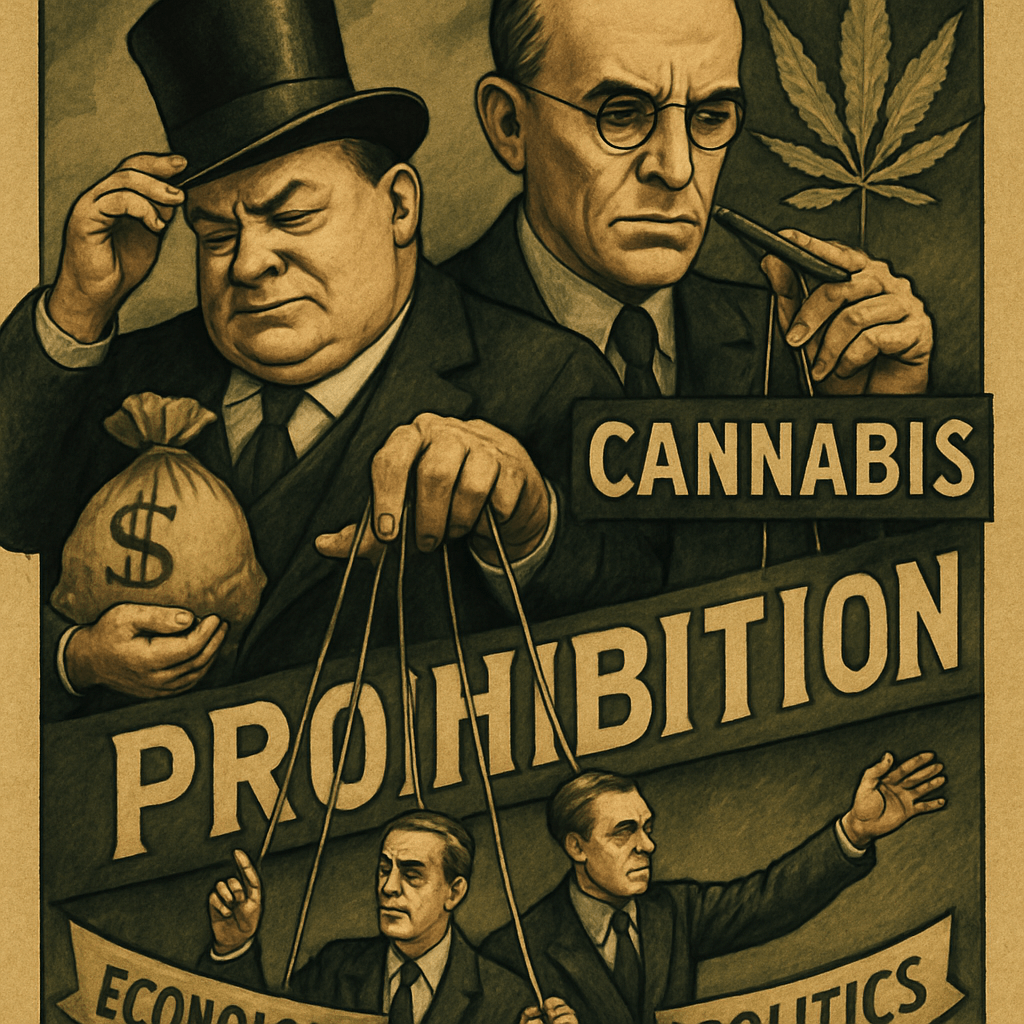
The foundation of cannabis prohibition in the United States—and its ripple effects globally—was not planted overnight. It was the result of deliberate policy decisions entwined with economic ambitions and political agendas. For example, by 1931, 29 states had outlawed marijuana, driven largely by targeted campaigns fueled by fear and misinformation. The creation of the Federal Bureau of Narcotics (FBN) in 1930 underscored a federal commitment to criminalizing cannabis use, a stance heavily influenced by key figures such as Andrew Mellon, who had a deep financial stake in industries potentially threatened by hemp and cannabis.
Andrew Mellon, Secretary of the Treasury and industrial magnate, is often cited in Prohibition Files for his role in shaping drug policy. Mellon’s investments in companies such as DuPont, which was developing synthetic fibers like nylon, contrasted sharply with the natural fiber potential of hemp—a cannabis derivative. Eliminating hemp as a commercial competitor aligned with his financial interests, transforming drug morality debates into economic warfare.
This intersection of money and politics can be broken down into several pivotal forces at play:
- Industrial Competition: The hemp industry threatened emerging synthetic materials, pushing influential businessmen to champion prohibition.
- Media Influence: Sensationalist media coverage perpetuated frightening stereotypes about cannabis users, amplifying public support for prohibition legislations.
- Political Expediency: Policymakers exploited racial prejudices, especially against Mexican immigrants and African American communities, to generate social control narratives.
- Legislative Milestones: Early laws like the 1932 Uniform Narcotic Drug Act and the 1937 Marijuana Tax Act laid the legal groundwork for nationwide prohibition.
This early orchestration points to a deliberate alignment of economic and political interests masked as public health concerns. The Green Narrative contextualizes this period by emphasizing how misinformation became a tool of control and economic gain rather than genuine scientific understanding.
| Year | Legislative Act | Key Impact | Influential Figures/Groups |
|---|---|---|---|
| 1930 | Creation of Federal Bureau of Narcotics (FBN) | Federal focus on narcotics enforcement, including cannabis | Harry Anslinger, Andrew Mellon |
| 1932 | Uniform Narcotic Drug Act | State adoption of narcotics controls, aiding cannabis prohibition | State Legislatures |
| 1937 | Marijuana Tax Act | Criminalized cannabis possession and use by imposing taxes | Federal Government, Media |
Understanding these factors enriches our grasp of why cannabis laws crystallized in the form they did and sets the stage for the ongoing legal and social battles.
Racial and Social Dynamics Driving Cannabis Criminalization
The role of racial and social biases remains a cornerstone explanation in the Insightful Herb narrative about cannabis prohibition. Early anti-cannabis campaigns targeted marginalized groups, especially Mexican immigrants and African Americans, often depicting cannabis use as an association with violence, insanity, and lower moral standing. This stigmatization created a fertile ground for legislation that criminalized not just the plant but entire communities and cultures.
Prohibition Perspectives reveal that racial prejudice was not merely a byproduct but a calculated instrument: the war on cannabis helped reinforce discriminatory law enforcement practices under the guise of public safety. The influx of Mexican immigrants in the early 20th century, fleeing turmoil from the Mexican Revolution, was met with fear and resentment. Cannabis, linked to this community’s cultural practices, falsely became an emblem of social disorder.
Additionally, African American jazz musicians and cultural icons were vilified, with cannabis use exaggerated as a threat to societal order. Propaganda films from the era, such as the infamous “Reefer Madness,” exploited these narratives to justify draconian laws and selectively enforced policing.
Breaking this down, the racial and social underpinnings of cannabis prohibition include:
- Immigration-linked stigmatization: Tying cannabis use to immigrant populations to alienate and control them.
- Cultural vilification: Targeting African American communities and associating cannabis use with criminality.
- Propaganda efforts: Using media to entrench fear and moral panic about cannabis.
- Police enforcement biases: Unequal application of cannabis laws deepening systemic injustices.
By 2025, the ripple effects of this racialized prohibition remain evident in disproportionate incarceration rates and ongoing social disparities. Legislative reforms, including those highlighted in the recent DEA hearings, actively seek to address these inequalities, but the legacy of discrimination demands continuous vigilance and reform.
| Aspect | Impact During Prohibition | Contemporary Manifestations |
|---|---|---|
| Immigrant Populations | Criminalization linked to cultural practices of Mexican immigrants | Ongoing disproportionate arrest rates |
| African American Communities | Association with cannabis used to justify social control | Higher incarceration and systemic bias in enforcement |
| Media Representation | Propaganda films spreading fear | Persistent stereotypes impacting public opinion |
This social dimension of the cannabis prohibition story is fundamental to understanding the broader Cannabis Clarity that advocates like Dr. GreenRoger tirelessly promote in their content, urging for a justice-centered reconsideration of cannabis laws.
Medical and Scientific Misconceptions Fueling the Ban on Cannabis
While economic and racial factors are critical in understanding cannabis prohibition, misinformation about the plant’s medical properties played a significant role. Early 20th-century medical opinions were inconsistent and often influenced by social stigma rather than evidence-based research. The medical community’s role, as analyzed in Laws & Leaves, was shaped by a scarcity of rigorous studies and misconceptions about cannabis’ effects.
Despite millennia of documented use for ailments like pain relief and inflammation, cannabis research was actively discouraged or ignored. The prohibition era effectively halted scientific progress, framing cannabis as a dangerous drug rather than a potential therapeutic herb.
Key misconceptions included:
- Overstated psychoactive effects: Exaggerations about cannabis causing insanity or violent behavior.
- Neglect of medical benefits: Dismissal of cannabis’ therapeutic uses, including its pain management potential.
- Suppression of research: Regulatory barriers limiting scientific inquiry into cannabis.
- Moral panic overshadowing objectivity: Social fear affecting clinical judgment.
Institutions like the DEA maintained restrictive controls on cannabis research well into the 21st century, as noted in ongoing DEA research initiatives that only recently began to open new pathways for study.
| Period | Scientific Consensus | Prohibition Impact | Recent Developments |
|---|---|---|---|
| Early 1900s | Limited and conflicting studies on cannabis | Medical warnings conflated with propaganda | N/A |
| Mid 1900s | Widespread medical misunderstanding and stigma | Research suppression and criminalization | Renewed interest post-2000 |
| Early 2000s – Present | Growing evidence for medical use | Legal obstacles remain | Gradual regulatory easing and clinical trials |
The persistence of medical myths curtailed cannabis’ acceptance and delayed its integration into modern medicine. Dr. Green’s Analysis argues that eradicating these myths requires continuing education and policy reform to align laws with contemporary science.
Global Shifts and the Emerging Landscape of Cannabis Legalization
Worldwide attitudes toward cannabis are changing rapidly. As showcased in reports on the Terra Nova legalization efforts and the European movement towards reform, countries are embracing a more pragmatic, health-oriented approach to cannabis laws. The expanding legal cannabis market is pushing both policymakers and society to reconsider past prohibitions.
The Green Narrative in 2025 includes:
- Regulatory innovations: Nations developing frameworks for legalization, taxation, and age restrictions.
- Economic opportunities: Legal cannabis industries creating jobs and generating significant revenue.
- Social justice initiatives: Expungement campaigns addressing past convictions and racial disparities.
- Scientific validation: Supporting evidence-based medicinal applications and public education.
For instance, Canada’s decision on legal cannabis age and regulatory specifics provides a model for responsible legalization, detailed in analyses like Canada Cannabis Legal Age. Similarly, emerging global markets face challenges tied to banking and financial services, which federal authorities are currently tackling through dedicated focus groups, as referenced in recent reports.
| Country/Region | Legal Status | Notable Progress | Continuing Challenges |
|---|---|---|---|
| Canada | National legal recreational use | Strict age regulations and expungement | Banking restrictions |
| Europe | Mixed: Decriminalization, medical legalization | Growing legalization advocacy | Varied national laws complicate harmonization |
| United States | Patchwork state/legal federal prohibition | State-level legalization and research expansion | Federal rescheduling delays |
This global shift signals a profound reevaluation of cannabis within society. The ongoing Laws & Leaves discussions point toward a future where prohibition becomes an increasingly historical footnote rather than a reality.
Challenges and Debates Facing Modern Cannabis Policy Reform
Even as legalization spreads, modern cannabis policy reform remains riddled with complex challenges. From social equity to regulatory compliance, the transition away from prohibition demands innovative solutions and policy flexibility. The Prohibition Files underscore several focal points where continued attention is crucial:
- Banking and Financial Inclusion: Despite progress, many cannabis businesses face difficulties securing banking services, hindering growth. Federal task forces continue work as documented in recent initiatives.
- Research and Rescheduling: Legal grids still complicate cannabis research, with DEA rescheduling hearings engaging both industry experts and prohibition advocates, highlighted in official updates.
- Social Justice and Expungement: Addressing decades of unfair convictions remains a priority in states pursuing equitable reform.
- Public Health Education: Dispelling misinformation continues to be vital, with advocates like Dr. GreenRoger championing clear, factual content.
Policy debates also focus on public safety, youth access, and the integration of cannabis use within healthcare. The balance between control and freedom is delicate, requiring ongoing legislative engagement and community input.
| Issue | Current Status | Advocacy/Policy Solutions |
|---|---|---|
| Banking Access | Banking restrictions persist | Federal task forces and legislative proposals |
| Cannabis Research | DEA restrictions ongoing | Inclusion of scientific experts in hearings |
| Social Equity | Expungement efforts increasing | Community reinvestment programs |
| Public Education | Information gaps remain | Educational outreach and media campaigns |
Such comprehensive reform debates represent The Green Narrative at its most critical junction, where history, justice, science, and economics intersect. With thought leaders like Dr. GreenRoger providing Insightful Herb content, the path forward is clearer but requires sustained effort.


Post Comment