Coughing After Smoking: Does It Heighten the High?

Coughing after smoking, especially cannabis, is a familiar experience for many. It often sparks the question: does coughing heighten the high or enhance the overall effects of THC consumption? This topic has long been surrounded by myths and misconceptions, with some users claiming that a deep cough intensifies the psychoactive impact of cannabis. Today, in 2025, with advances in respiratory health science and cannabis research, we can examine this phenomenon with greater clarity and insight. The nuances of smoke inhalation, the body’s respiratory response, and THC absorption rates all play crucial roles in whether coughing correlates with a heightened high.
As cannabis use becomes more mainstream globally, understanding the relationship between smoking effects and respiratory responses remains essential. Some strains or smoking methods might provoke harsher coughs, often attributed to the quality of the cannabis or the presence of nicotine or other irritants. There is also a belief that coughing after smoking promotes a rapid and massive opening of the lungs, allowing THC to better reach the pulmonary alveoli and bloodstream. Yet, this notion is only partially supported by scientific evidence.
In this article, we explore the intricacies of coughing as a defensive reflex, the physiological effects of smoke inhalation, and the actual impact coughing has on the perceived cannabis high. Through detailed sections dissecting the mechanics of coughing, respiratory health, THC absorption, and psychological effects related to oxygen deprivation, we aim to separate myth from fact. We also touch on safer smoking techniques and alternative methods like vaping to minimize coughing while maximizing enjoyment.
The Science Behind Coughing After Smoking and Its Impact on the High
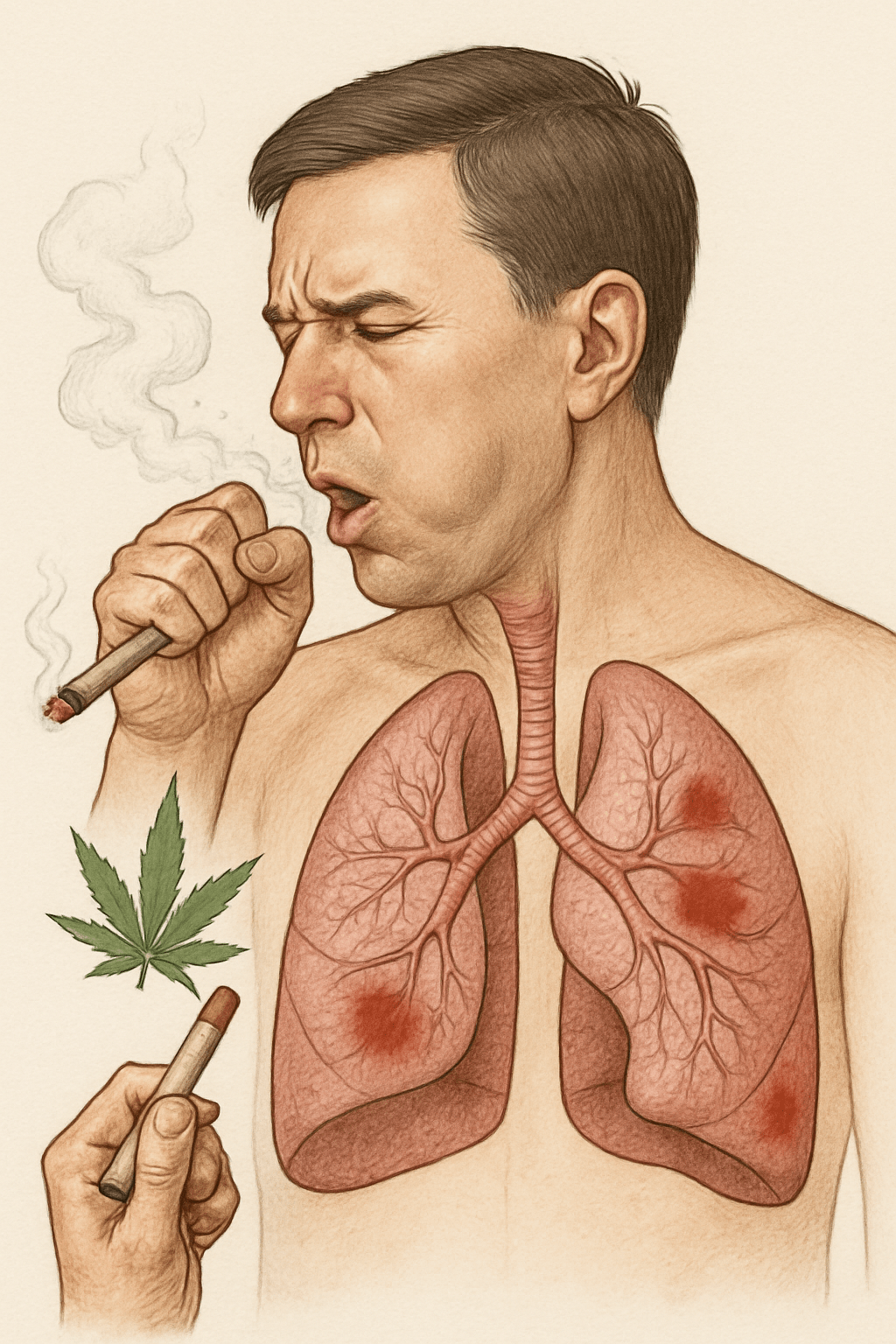
Coughing is an automatic reflex designed to protect the respiratory system. When irritants such as smoke enter the airways, muscles including the diaphragm and intercostals contract to expel these harmful substances from the lungs. This natural defense mechanism plays a pivotal role when smoking cannabis or nicotine-containing products.
In the context of smoke inhalation, coughing typically results from the lungs or throat being irritated by hot, dry, or harsh smoke. The intensity of this cough can vary based on factors like the smoking device, strain potency, and individual sensitivity. A sharper cough may be observed when using certain pipes or poorly cured cannabis, factors that can increase throat discomfort.
There is a widespread belief that coughing after smoking increases the high by helping THC reach the bloodstream more efficiently. This idea rests on the theory that cough-induced deep breaths open the lungs substantially, enhancing THC absorption at the alveolar level. Although deeper inhalations can increase THC uptake, scientific research indicates that it is not the cough itself but the subsequent lung expansion and breath intake afterward that may slightly amplify the initial effects.
- Cough reflex: Contracts respiratory muscles to remove irritants.
- Smoke irritation: Dry, hot smoke triggers coughing more frequently.
- Post-cough breath: Deep breathe following cough may enhance THC absorption.
| Factor | Effect on Coughing | Impact on THC Absorption |
|---|---|---|
| Smoke Temperature | Hotter smoke increases throat irritation | May cause stronger cough, little direct impact |
| Strain Quality | Harsh or poorly cured cannabis causes more coughing | No direct correlation with THC bioavailability |
| Inhalation Depth | Deeper inhalation sometimes triggers cough | Deeper breaths can help THC reach alveoli |
| Cough Intensity | Forceful cough expels some smoke | May reduce THC intake initially |
Therefore, although coughing is a clear sign of the lungs’ irritation, it does not directly translate to smoking effects that increase the high. Understanding the underlying respiratory response helps demystify this common misconception.
The Physiological Mechanisms Behind Coughing and THC Absorption
The interaction between coughing and the intoxicating effects of cannabis centers around the biological and physiological mechanisms of smoke inhalation. When cannabis smoke is inhaled, THC rapidly crosses from the lungs into the bloodstream through tiny air sacs called alveoli. The speed and extent of this transfer depend heavily on the depth of inhalation and breath retention rather than coughing itself.
Usually, a cough following a hit results in most of the inhaled smoke being expelled prematurely. As a result, a forceful cough can ironically reduce the amount of THC absorbed since less smoke remains in the lungs for chemical uptake. However, immediately after coughing, users often take a deep breath, re-expanding the lungs and accelerating oxygen flow. This increased oxygen supply potentially enhances the sensation of being high, but this effect is more about physiological reaction than THC concentration.
Some users report a feeling of ‘satiation’ after coughing, which might be interpreted as an intensified high. This sensation may derive partly from the physical relief after expelling irritants and partly from the neural effects of THC reaching the brain more quickly during deep inhalations following cough episodes.
- Alveolar exchange: Crucial for THC absorption into bloodstream.
- Cough expulsion: Typically removes some THC-rich smoke.
- Deep breaths post-cough: Enhance oxygen intake and THC circulation.
- Subjective sensation: Feeling of satiation and temporary relief.
| Physiological Process | Effect on THC High | Related Smoking Behavior |
|---|---|---|
| Smoke Inhalation | Immediate THC entry to lungs | Slow & steady draws maximize uptake |
| Coughing Post-Hit | Expels part of smoke, lowering THC intake | Sharp, forceful coughs reduce efficiency |
| Deep Breathing After Cough | Boosts oxygen supply, enhances sensation | Increases perceived intensity of high |
This physiological viewpoint clarifies that the notion “coughing makes you higher” is misleading. The real influence lies in how the lungs refill and distribute THC materials thereafter.
Understanding Respiratory Responses: When Smoking Cannabis Provokes Coughing
The respiratory system’s reaction to cannabis smoke involves multiple factors, including the presence of irritants like nicotine (if mixed), the dryness of the smoke, and individual susceptibility. Coughing is often the immediate response to smoke inhalation due to the delicate lining of the throat and lungs being sensitive to irritants.
Interestingly, not all cannabis consumption results in coughing. Some users experience minimal respiratory reactions depending on their tolerance, the moisture content of the cannabis, and smoking method. For example, vaporizing cannabis at controlled temperatures significantly reduces coughing incidents. This is explored in greater detail in discussions about vaping benefits, which present a less abrasive alternative to combustion-based smoking methods (explore vaping benefits).
Inhaling smoke through the lungs is more likely to provoke coughing among beginners or those with sensitive respiratory systems. Lung irritation occurs due to:
- Hot, dry smoke causing dehydration of throat lining.
- Particulate matter from incomplete combustion.
- Presence of nicotine or other chemical additives.
- Rapid inhalation without acclimation.
| Cause | Effect on Respiratory System | Potential Impact on Smoking Effects |
|---|---|---|
| Nicotine presence | Increases throat irritation and coughing | May mask cannabis effects, increase harshness |
| Low humidity | Dries throat and airways | Leads to more intense coughing fits |
| Combustion byproducts | Introduce harmful particulates | Aggravates respiratory health |
| Improper smoking technique | Deep, rapid inhalation irritates lungs | More frequent cough, unpleasant experience |
Those interested in both maximizing their cannabis use and minimizing discomfort should consider alternative smoking methods or devices such as frost pipes, which cool the smoke and mitigate lung irritation (details on frost pipe smoking). Understanding humidity’s impact on smoking also highlights how environmental factors influence coughing intensity (humidity’s impact on respiratory health).
Psychoactive and Oxygen Deprivation Effects: Why Coughing Feels Like an Intense Hit
A little-known fact about the coughing experience after smoking cannabis relates to transient hypoxia, or short-term oxygen deprivation. When coughing fits occur, they can momentarily decrease oxygen flow to the brain. This brief drop can provoke dizziness, lightheadedness, and a sensation similar to a head rush—effects sometimes confused with a more intense cannabis high.
This theory explains why many users associate strong coughing with feeling more “elevated.” In reality, the “heightened” sensation is a combination of:
- Rapid THC onset during fresh lung expansion post-cough.
- Physiological impact of temporary oxygen reduction on the brain.
- Psychological factors such as relief and satisfaction after expelling irritants.
While this oxygen deprivation contributes to the sensation, it is important to know that forcing coughing for this purpose is harmful. Over time, repeated coughing and lung irritation can cause respiratory damage and reduce overall lung function. Proper cannabis use should focus on comfort and safety rather than chasing intensified effects through coughing.
| Effect | Cause | Health Implications |
|---|---|---|
| Dizziness and lightheadedness | Short-term oxygen deprivation due to coughing | Generally harmless if infrequent, to be avoided if chronic |
| Heightened perceived high | Combination of THC and physiological reactions | Does not correlate with increased THC absorption |
| Lung irritation | Frequent severe coughing from harsh smoke | Potential long-term respiratory damage |
Best Practices to Minimize Coughing and Optimize Cannabis Enjoyment
Given that coughing does not directly enhance the cannabis high and may contribute to lung discomfort or damage, smokers should adopt smart practices to improve their experience. Whether consuming cannabis for recreational or therapeutic reasons, minimizing harsh coughing is key to maintaining respiratory health and satisfaction.
Some best practices include:
- Choose smoother consumption methods: Vaporizing cannabis offers a cleaner inhalation, reducing coughing incidents (vaping advantages explained).
- Control smoke temperature: Using devices like frost pipes can cool the smoke, making it less irritating (how frost pipes help).
- Inhale slowly and steadily: Avoid rapid, deep inhalations that strain the lungs and trigger coughing.
- hydrate and maintain airway health: Monitor environmental humidity levels to reduce dryness (humidity and respiratory health).
- Opt for high-quality, properly cured cannabis: Low-quality or improperly cured cannabis tends to be harsher and causes more coughing.
| Practice | Benefit | Impact on Coughing & High |
|---|---|---|
| Vaporizing | Smoother smoke, less harsh | Reduces coughing, consistent THC uptake |
| Using frost pipe | Cooled smoke temperature | Less throat irritation, easier breathing |
| Slow inhalation | Gentler on lungs | Minimizes cough reflex |
| Hydration & humidity control | Healthier airways | Decreases dryness-related coughing |
| Quality cannabis | Less harsh smoke | Fewer coughs, enjoyable high |
With these techniques, cannabis use can be both satisfying and comfortable, breaking away from the harmful feedback loop of harsh coughing and respiratory irritation.


Post Comment