Which Countries Embraced Cannabis Legalization in 2017?
The year 2017 marked a significant turning point in global cannabis legislation, sparking transformative policy shifts across diverse regions. Several countries, influenced by growing medical research and shifting public opinions, embraced cannabis legalization or decriminalization, particularly for therapeutic and recreational use. These reforms signaled a push toward rational drug policy reform, aiming to regulate the possession, medical application, and sometimes even the commercial distribution of cannabis. The movement mirrored a wider trend toward dismantling prohibition-era laws, with nations adopting varying legislative frameworks according to their cultural, political, and social contexts.
From Europe to Latin America, these legal advancements challenged traditional norms and allowed new economic and healthcare opportunities to surface. They primarily focused on the medical benefits of marijuana, demonstrating a more compassionate and pragmatic approach to drug regulation. However, the transitions were not without controversies and legal complexities, especially given the differing national and regional stances on cannabis. The developments in 2017 laid foundational stones for deeper reforms that have continued to evolve into 2025, influencing international discussions about drug policy reform worldwide.
This article explores the key countries that took landmark steps toward cannabis legalization in 2017, examining their legislative changes, the political debates surrounding them, and the implications for public health and law enforcement. Through detailed analysis, it offers insight into the regulatory models adopted and the challenges encountered during this critical year of transformation.
Major Cannabis Legalization Policies Adopted in Europe in 2017
The year 2017 proved pivotal for cannabis legalization laws in Europe, where multiple countries made historic decisions to embrace new regulatory frameworks primarily focused on medical marijuana. These reforms reflected both scientific advancements and public pressure to reconsider drug policies.
Germany’s Pioneer Legalization of Medical Cannabis
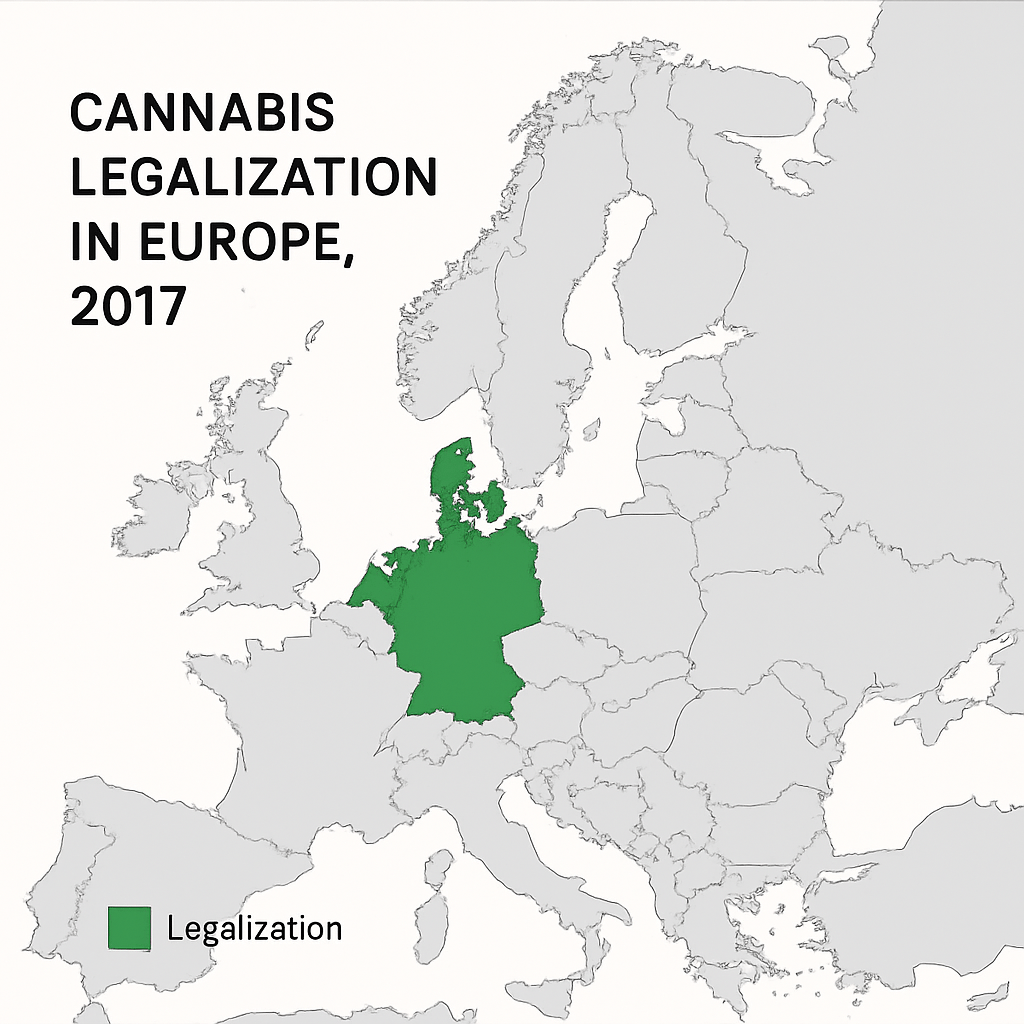
Germany stood out in January 2017 by passing comprehensive legislation legalizing cannabis for medical use. This bill, effective from March, allowed patients suffering from severe illnesses to access marijuana through prescriptions covered by health insurance — a major breakthrough in a country previously known for strict drug policies. The shift was driven by growing evidence supporting cannabis’s therapeutic benefits and the demands of patient advocacy groups seeking alternatives to conventional treatments.
This policy has transformed Germany into one of the leading medical cannabis markets in Europe. Patients can now obtain cannabis flowers, extracts, and other cannabis-based products through pharmacies. The law also permits doctors to recommend cannabis when other treatments have failed, offering new hope to patients with chronic pain, multiple sclerosis, or cancer symptoms. However, some bureaucratic challenges remain, including restrictions on home cultivation for patients and complex insurance reimbursements. For example, detailed discussions about insurance coverage of medical cannabis in Germany have evolved since the law’s inception.
Catalogna’s Cannabis Social Clubs and Regional Regulation
In the autonomous region of Catalonia (Catalunya), Spain, 2017 saw the establishment of a regulated framework for Cannabis Social Clubs (CSCs). This unique model legalized the cultivation, consumption, and distribution of cannabis within registered private clubs, aiming to reduce illicit market activity and protect public health. These clubs operate under strict rules: members cultivate cannabis collectively and share the harvest among themselves, discouraging resale outside the clubs.
However, the movement encountered political resistance, particularly from the central Spanish government, which invalidated regional cannabis laws as part of a broader conflict linked to Catalan independence efforts. Despite this setback, the Cannabis Social Clubs remain an influential regulation model, sparking discussions on how cannabis policy can interact with regional autonomy and cultural identity.
Greece’s Entry into Medical Cannabis Legalization
In June 2017, Greece made a significant announcement regarding medical marijuana. The Prime Minister and the Health Minister jointly declared the legalization of cannabis for therapeutic use. This decision marked a significant policy shift in a country where drug reform historically lagged behind European peers.
The Greek government tasked relevant authorities with developing a regulatory system to permit the medical use of cannabis derivatives, reflecting growing recognition of cannabis as a legitimate medical treatment. Patients with chronic conditions could envision improved access to alternative therapies, and the law also encouraged scientific research into the plant’s potential. This development contributed to the growing movement across Southern Europe toward more progressive drug legislation.
| Country | Legalization Type | Effective Date | Key Features | Challenges |
|---|---|---|---|---|
| Germany | Medical Cannabis Legalization | March 2017 | Insurance coverage; prescription policy; pharmacy distribution | Home cultivation restrictions; insurance processing |
| Catalogna | Cannabis Social Club Regulation | July 2017 | Private clubs; collective cultivation; membership-only access | Central government opposition; legality issues |
| Greece | Medical Cannabis Legalization | June 2017 | Therapeutic use authorization; regulatory framework development | Implementation delays; regulatory design |
Innovative Regulation and Decriminalization Approaches
Several other European countries began experimenting with decriminalization and medical regulation in 2017, reflecting a pragmatic trend toward balancing public health concerns with enforcement priorities. For example, judicial decisions in Eastern Europe, like Georgia’s constitutional court ruling, effectively decriminalized cannabis consumption. This was a foundational move toward broader legalization by declaring criminal prosecution for consumption unconstitutional.
These incremental reforms across European countries revealed a shifting paradigm in drug policy, prioritizing harm reduction and medical applicability over punitive frameworks.
Latin America’s Cannabis Legalization Milestones in 2017
Latin America solidified its position as a leader in cannabis reform during 2017, championing new legislation that extended beyond mere decriminalization toward medical sales and regulated use, even challenging traditional regional drug policies.
Chile’s Pharmacy Sales of Cannabis Products
In May 2017, Chile became the first Latin American country to authorize the sale of cannabis products in pharmacies. Prior to that, patients mainly accessed cannabis through compassion clubs and limited import rights. The move was particularly groundbreaking for patient access, opening a legal, regulated channel to cannabis oils and derivatives, making therapeutic use more straightforward and safer.
This development followed Uruguay, which was the first country globally to fully legalize cannabis in 2013 but only began retail sales in pharmacies after Chile’s initiative. Chile’s model emphasized government supervision and quality control to ensure patient safety. However, challenges included ensuring affordable pricing and monitoring the effects of these new products on public health.
Mexico’s Medical Cannabis Legalization and Broader Plans
Mexico’s cannabis policy also evolved substantially in 2017. President Enrique Peña Nieto signed into law the medical marijuana legalization act in June, aiming to regulate therapeutic use of cannabis derivatives. The legislation encouraged the Ministry of Health to oversee a research program studying cannabis and developing public policies. By late 2017, plans were announced to authorize sales of cannabis-based cosmetics and edibles starting January 2018.
This move represented a cautious but forward-thinking approach, targeting medical consumers first while laying groundwork for expanded reforms. Mexico’s reforms illustrated the intersection of drug policy with emerging scientific research and international trade opportunities, as the country anticipated potential market growth in cannabis-derived products.
Peru’s Legislative Push for Medical Cannabis Access
In October 2017, Peru’s Congress took a progressive stance by authorizing medical cannabis use for patients with chronic or terminal illnesses. The law permitted the usage of cannabis oil, reflecting a growing acknowledgement of marijuana’s medicinal potential in helping manage symptoms such as pain and nausea.
While the law was a major step forward in Peru’s drug reform, actual implementation faced hurdles, including building distribution infrastructure and promoting physician education about cannabis therapies.
| Country | Type of Legalization | Date Implemented | Key Regulations | Institutional Challenges |
|---|---|---|---|---|
| Chile | Pharmacy Sales of Cannabis Products | May 2017 | Government supervision; quality control; patient access rights | Pricing regulation; public health monitoring |
| Mexico | Medical Cannabis Legalization | June 2017 | Research programs; therapeutic use; sales authorization for cosmetics/edibles | Policy development; research implementation |
| Peru | Medical Cannabis Law | October 2017 | Authorization for chronic and terminal illness patients; cannabis oil usage | Distribution and education challenges |
Decriminalization and Preliminary Steps in Surrounding Countries
Other Latin American nations continued decriminalizing cannabis use or planned future reforms. For instance, Argentina’s 2017 policies increased patient access to medical cannabis with some of the most progressive healthcare measures, including offering medical marijuana to patients at no cost. Moreover, countries like Paraguay legalized medical cannabis cultivation, with implementation pending presidential approval in early 2018. These initiatives underscored a regional momentum toward drug policy modernization.
Emerging Cannabis Legalization Trends and Policy Developments in Other Regions
Beyond Europe and Latin America, 2017 featured noteworthy cannabis policy changes worldwide, highlighting varying approaches to legalization, decriminalization, and regulatory innovation.
Georgia’s Constitutional Court Decriminalization Rulings
Georgia’s Constitutional Court delivered landmark decisions in 2017 by ruling that prosecuting individuals for cannabis consumption was unconstitutional. This caused immediate decriminalization of use and followed a prior ruling that decriminalized cultivation. These decisions not only removed criminal penalties but also signaled forthcoming more comprehensive legislation on cannabis legalization.
This judicial path to reform serves as an illuminating case of how courts can act as catalysts for drug policy change, even when political systems remain hesitant. However, Georgia still needed to establish thorough regulations for distribution and production to stabilize the market and ensure public safety.
Announcements and Preparations for 2018 Reforms
Several countries took initial steps in 2017, announcing plans for cannabis legalization expected to take effect in 2018. For example, Paraguay legalized medical cannabis cultivation pending presidential approval, while Luxembourg publicly committed to introducing medical cannabis laws. Additionally, New Zealand aimed at broadening patients’ access to medical marijuana shortly after late October 2017. India also proposed medical cannabis legalization legislation, supported by major industrial actors interested in cannabis therapeutics.
| Country | Policy Move | Year of Announcement | Status by Early 2018 | Notes |
|---|---|---|---|---|
| Georgia | Decriminalization by Constitutional Court | 2017 | Use decriminalized; awaiting further legislation | Judicial reform approach |
| Paraguay | Legalized Medical Cultivation | 2017 | Pending president signature | Supportive political climate |
| Luxembourg | Medical Cannabis Legalization Planned | 2017 | Legislation drafting | Progressive policy goals |
| New Zealand | Expanded Medical Cannabis Access | 2017 | Implementation efforts ongoing | Patient-focused reforms |
| India | Proposed Medical Cannabis Legalization | 2017 | Pending parliamentary approval | Industry-backed initiative |
Impacts of 2017 Cannabis Legalization on Drug Policy and Society
The legalization and decriminalization measures implemented in 2017 significantly influenced drug reform discourse, pushing many countries to rethink their policies concerning cannabis. These impacts span public health, law enforcement, and economic sectors.
Public Health Approaches and Medical Benefits Recognition
Recognizing cannabis’s therapeutic potential was a driving force behind 2017 reforms. Countries legalizing medical marijuana expanded patient access to pain management alternatives and treatments for symptoms associated with chronic illnesses. These policy changes aligned with mounting scientific evidence and studies confirming cannabis compounds can greatly benefit patients facing conditions from epilepsy to cancer.
For instance, clinical observations in countries like Germany and Mexico showed improved quality of life for patients using cannabis-based treatments. Alongside benefits, health authorities increased monitoring of cannabis effects to avoid adverse consequences, as detailed in recent medical research examining the chemical profiles of approved cannabis products.
Law Enforcement and Decriminalization Effects
Decriminalization, such as that enacted in Georgia and various Latin American countries, led to shifts in policing priorities and methods. By removing criminal penalties for personal use, law enforcement could redirect resources toward more serious crimes. Additionally, the reduced stigma around cannabis helped foster public health engagement rather than penal approaches.
Economic Opportunities and Regulation Challenges
Cannabis legalization in 2017 also opened avenues for emerging markets, pharmaceuticals, and agribusiness. Countries had to develop strict regulation to balance commercial interests with public safety. Regulation of production, quality controls, and licensing processes became critical, as seen in Germany’s continued policy refinement allowing patient cultivation under controlled circumstances, with insights available from sources like Germany patient grow news.
Despite the opportunities, challenges such as preventing illicit markets, avoiding overdoses, and managing hospitalizations linked to recreational cannabis use required constant attention, highlighted in various health studies including hospitalization reports and information on fatal overdoses.
| Impact Area | Positive Outcomes | Challenges |
|---|---|---|
| Public Health | Expanded patient treatment options; pain management; research stimulation | Monitoring adverse effects; regulating dosage and quality |
| Law Enforcement | Reduced arrests for minor offenses; resource reallocation; harm reduction focus | Training police; managing new legal frameworks |
| Economy | New markets; job creation; pharmaceutical development | Preventing illicit trade; regulatory compliance Enforcement |
These multifaceted impacts highlight how 2017’s reforms set in motion a global reevaluation of cannabis policy with effects still unfolding into 2025 and beyond.
Case Studies of 2017 Cannabis Legalization: Lessons and Models
Examining specific national cases from 2017 provides valuable insights into how different countries approached cannabis legalization, offering lessons for current and future reformers.
Germany: Balancing Medical Access with Insurance and Cultivation Regulations
Germany’s comprehensive medical cannabis law reflects a sophisticated approach to regulation, ensuring patient rights while integrating cannabis into the healthcare system. However, ongoing challenges such as insurance negotiations and patients’ limited rights to cultivate their medicine illustrate the complexities of such policies. Germany’s experience highlights the importance of coordination between healthcare providers, insurers, and regulators to make medical cannabis accessible.
Chile: Advancing Access Through Pharmacy Sales and Government Oversight
Chile’s pharmacy sales model stands as a pioneering example in Latin America, combining patient access with pharmaceutical quality standards. This framework prioritizes patient safety by enforcing strict government supervision, yet it requires continued evaluation to address cost barriers and regulatory effectiveness. Chile’s initiative demonstrates how legal access models can evolve alongside market and policy changes, balancing public health and patient needs.
Georgia: Judicial Activism as a Catalyst for Drug Reform
Georgia’s constitutional court rulings present a unique route for drug reform through judicial intervention rather than legislative debate. This path expedited the decriminalization of cannabis use and cultivation at a critical juncture. However, it also underlines that legal clarity and comprehensive regulation remain necessary to stabilize markets and protect consumers.
- Key lessons: Multilateral cooperation between government branches is crucial.
- Medical cannabis integration demands balancing patient rights and regulatory controls.
- Judicial rulings can accelerate reform but require subsequent legislative support.
- Pharmacy-based models highlight the potential in maintaining quality standards in emerging cannabis markets.
- Regional autonomy issues, like in Catalonia, illustrate the complexity where cannabis intersects with politics.


Post Comment