Atlanta Takes a Bold Step: Cannabis Decriminalization Initiative Unveiled
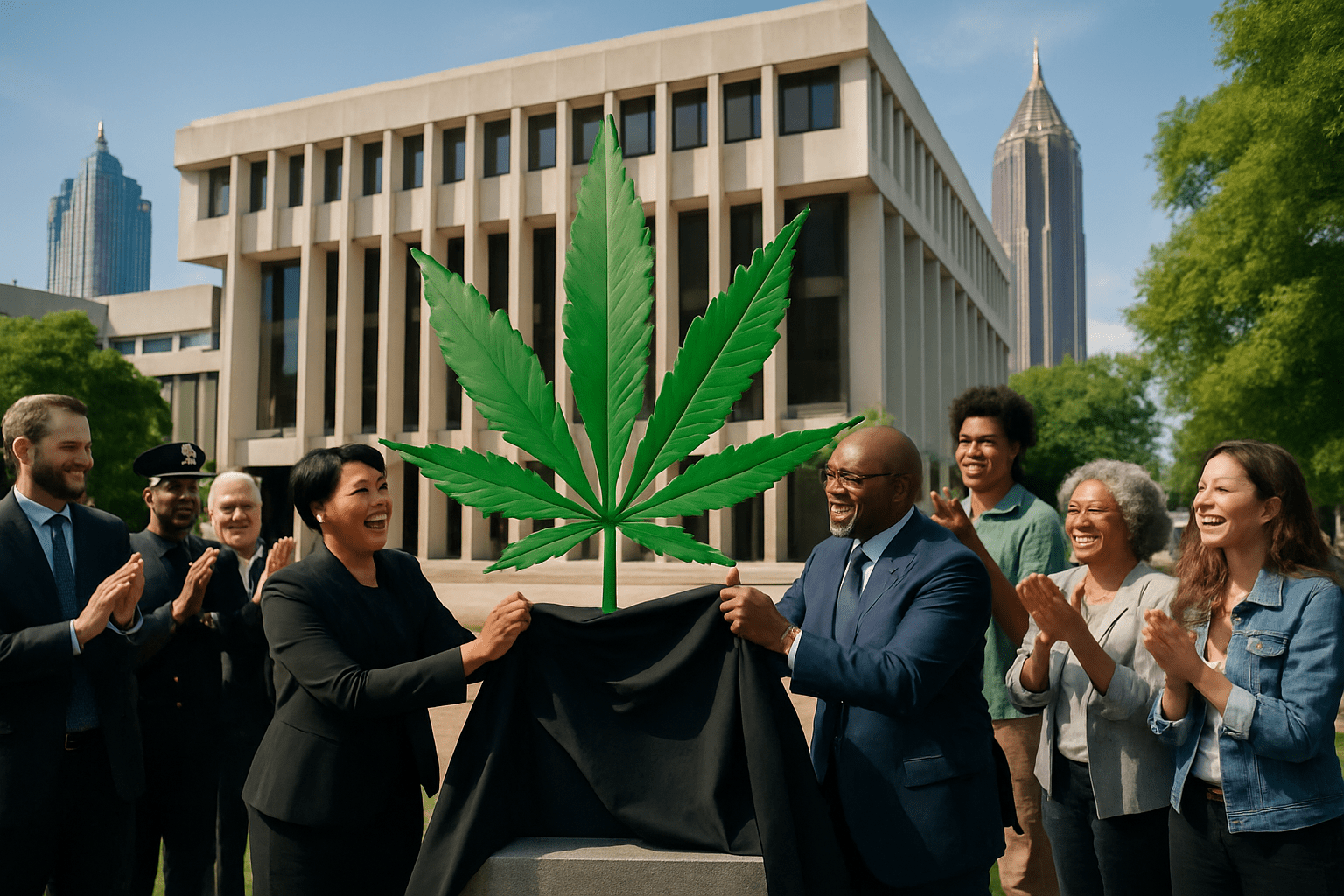
Atlanta has embarked on a transformative journey in 2025 by unveiling a bold initiative aimed at decriminalizing cannabis possession. The recent decision by the City Council to pass Ordinance 1700-1152 marks a pivotal moment in both local governance and broader national discussions surrounding drug policy reform. This ordinance replaces the harsh penalties previously imposed on cannabis possession — where individuals caught with up to 28 grams faced fines as steep as $1,000 and up to six months in jail — with a significantly reduced maximum fine of $75 and no imprisonment. The initiative reflects growing recognition of racial disparities in enforcement and a commitment to reshaping criminal justice and public health priorities in the Atlanta community.
Key voices advocating for this change, including Councilmember Kwanza Hall and former police chief Dr. George Nappe, underscore the acknowledgment of past injustices inflicted disproportionately on African American residents. Arrests related to cannabis offenses in Atlanta have historically targeted minorities at a rate of 92%, despite data showing that marijuana usage is consistent across racial lines. The decriminalization effort aligns Atlanta with other U.S. cities such as Kansas City, Dallas, and Nashville, pushing beyond their respective state laws to adopt more progressive cannabis regulations. These efforts not only respond to public health imperatives but also contribute to ongoing national dialogues about drug policy reform.
In the midst of broader shifts in cannabis legislation, this initiative stands as a touchstone for discussions about legal reform, social equity, and the future of marijuana regulation in urban America. As some parts of the world, including Europe, begin reassessing their drug policies, Atlanta’s local bold step serves as a case study of progressive action within a traditionally conservative region. The implications for criminal justice reform, public health management, and societal attitudes toward cannabis are profound. This article explores the multifaceted consequences, debates, and comparisons sparked by Atlanta’s move toward cannabis decriminalization.
Understanding Atlanta’s Bold Cannabis Decriminalization Initiative in 2025
The cannabis decriminalization initiative unveiled by Atlanta’s City Council represents a definitive shift in the city’s approach to marijuana possession offenses. Prior to this change, possession of up to 28 grams of cannabis could lead to a fine of up to $1,000 and up to six months imprisonment, a punishment that has been disproportionately enforced against African American residents. The new ordinance reduces the maximum penalty to a $75 fine, eliminating jail time and prioritizing a less punitive response to personal cannabis use.
Councilmember Kwanza Hall, the ordinance’s primary advocate, articulated the stakes involved: a historical policy framework that resulted in more than 90% of marijuana-related incarcerations targeting minority populations. The racial and social inequities inherent in drug law enforcement motivated a reexamination of the city’s criminal justice and public health priorities. Hall credits Dr. George Nappe, Atlanta’s first African American police chief, for lending vital support to the initiative, emphasizing a shared acknowledgment of the law’s prior harshness and racial implications.
This legislative overhaul does more than adjust penalties: it recognizes cannabis decriminalization as a form of legal reform aimed at reducing the burden on the judicial system while addressing disparities in enforcement. The city’s decision follows broader trends in U.S. municipalities that have moved beyond state restrictions to implement more progressive drug policies. Included in this group are cities like Kansas City, Dallas, Pittsburgh, and Nashville. These cities have adopted ordinances allowing residents to possess, cultivate, or share certain amounts of cannabis safely without legal retribution, making Atlanta a part of this growing national movement.
- Previous penalties in Atlanta: Up to $1,000 fine and six months imprisonment for possession of 28g or less.
- New penalty structure: Maximum $75 fine, no jail time.
- Disparity statistics: 92% of arrests involved African Americans despite similar cannabis use across races.
- Comparison cities: Kansas City, Dallas, Pittsburgh, Nashville.
- Key supporters: Kwanza Hall and Dr. George Nappe.
| Aspect | Before Ordinance 1700-1152 | After Ordinance 1700-1152 |
|---|---|---|
| Maximum fine | $1,000 | $75 |
| Imprisonment | Up to 6 months | None |
| Maximum possession allowed | 28 grams | 28 grams |
| Targeted demographic enforcement | 92% African Americans arrested | Policy aims for equitable treatment |
This bold step in Atlanta aligns with the growing understanding that drug policy reform and public health must work hand-in-hand. The initiative is a response to the undeniable racial disparities and an evolving perception of cannabis from an illicit substance to a matter better addressed through regulated tolerance and harm reduction.
Racial Disparities and the Impact of Cannabis Decriminalization on Criminal Justice in Atlanta
One of the most compelling reasons for Atlanta’s bold step toward cannabis decriminalization has been the rectification of racial injustices within the criminal justice system. For decades, drug policy enforcement has disproportionately targeted African American communities, a phenomenon statistically blatant in the arrest data related to marijuana offenses. While research indicates marijuana usage rates among different racial groups are relatively similar, enforcement tactics have resulted in over 90% of marijuana possession arrests involving African Americans in Atlanta. This has caused long-term damage to families, careers, and community trust.
Kwanza Hall and supporting voices stress that decriminalization is not merely about reducing fines but about fundamentally altering a system that has perpetuated inequality. This legislative move aims to dismantle part of the institutional racism embedded in drug laws. The involvement of Dr. George Nappe—a respected figure as Atlanta’s first African American police chief—signals a crucial acknowledgment from law enforcement itself about past failings and the need for change.
Racial disparities in drug policy have been a major topic nationally, with many cities and states initiating reforms to address systemic inequities. Atlanta’s ordinance emerges in a context where public and judicial opinion increasingly calls for adjustments in how drug crimes, especially cannabis-related offenses, are handled. The policy hopes to:
- Decrease incarceration rates among minorities by reducing arrests for minor cannabis possession.
- Improve community relations with law enforcement through more equitable and sensible drug policies.
- Redirect criminal justice resources to focus on more severe crimes rather than low-level cannabis possession.
- Promote public health perspectives instead of punitive approaches to drug use.
- Support social equity programs as part of broader drug policy reform.
| Impact Area | Before Decriminalization | Expected After Decriminalization |
|---|---|---|
| African American incarceration rate for cannabis offenses | High (over 90% of arrests) | Reduced drastically |
| Law enforcement-community trust | Low, strained relations | Improved through policy changes |
| Judicial system burden | High due to low-level offenses | Reduced caseload |
| Public health focus on drug use | Minimal | Strengthened |
| Social equity programs related to cannabis | Limited | Expanded post reform |
Atlanta’s initiative is a vital example of how local governments can enact policies that not only reduce punitive consequences but advance racial justice within the fabric of criminal justice. The policy fosters an environment where the city confronts long-standing inequalities and moves toward a more inclusive legal framework.
Comparing Atlanta’s Cannabis Reform with Other U.S. Cities Taking Bold Steps in Drug Policy
Atlanta’s cannabis decriminalization initiative can be situated within a broader movement in American cities adopting progressive stances on marijuana possession beyond state mandates. Cities like Kansas City, Dallas, Pittsburgh, and Nashville have similarly pursued more lenient policies allowing residents to carry, cultivate, or share cannabis without facing severe penalties or imprisonment.
These cities have sought to:
- Reduce incarceration rates for minor cannabis offenses that disproportionately impact minority communities.
- Shift from criminalization to public health approaches in drug policy management.
- Implement social equity provisions to repair harms from historical discriminatory practices.
- Enhance local autonomy by tailoring cannabis laws that exceed state-level restrictions.
- Stimulate economic opportunities within the cannabis industry and related sectors.
| City | Decriminalization Year | Maximum Possession Limit | Penalty Type | Social Equity Initiatives |
|---|---|---|---|---|
| Atlanta, GA | 2025 | 28 grams | Fine up to $75 | Policy aims for expanded equity programs |
| Kansas City, MO | 2023 | 28 grams | Fine up to $100 | Existing social equity programs in cannabis |
| Dallas, TX | 2024 | 28 grams | Fine up to $150 | Plans for equity initiatives underway |
| Pittsburgh, PA | 2023 | 28 grams | Fine up to $50 | Comprehensive equity programs |
| Nashville, TN | 2022 | 28 grams | Fine up to $100 | Ongoing social equity reforms |
This intercity comparison highlights a trend in which local governments flexibly respond to social demands for more humane and equitable drug policies. Atlanta’s ordinance fits within this evolving framework, emphasizing public health and criminal justice rebalancing beyond traditional prohibitive approaches.
Public Health Implications of Atlanta’s Cannabis Legal Reform
Transitioning from punitive drug policies to a health-oriented approach signifies Atlanta’s readiness to tackle cannabis use from a public health perspective. Decriminalization reduces criminal penalties but simultaneously invites an increased focus on responsible use, education, harm reduction, and treatment when necessary. This shift acknowledges that criminal justice intervention is often ill-suited to managing the complexities of drug use within communities.
Public health stakeholders in Atlanta anticipate several benefits from the new ordinance:
- Lower rates of incarceration-related health complications including mental health deterioration often linked to imprisonment.
- Improved access to treatment resources for individuals experiencing substance use issues without the stigma of criminal records.
- Enhanced public education campaigns aimed at promoting informed decisions about marijuana consumption.
- Reduction in overdose and unsafe usage instances through better harm reduction strategies.
- Budget reallocation from enforcement to healthcare and community support systems.
| Public Health Aspect | Before Decriminalization | After Decriminalization |
|---|---|---|
| Stigma related to cannabis use | High, leading to underreporting and avoidance of care | Reduced, encouraging openness and treatment |
| Access to substance use resources | Limited due to criminalization concerns | Increased with decriminalization and policy support |
| Health complications from incarceration | Common for individuals jailed for possession | Decreased with reduced incarceration rates |
| Public education investment | Minimal | Expanded focus on responsible usage |
| Community health outcomes | Lower due to punitive focus | Projected improvement with new policies |
This health-centered legal reform dovetails with global cannabis trends, including recent developments in Europe, where similar regulatory frameworks are gaining traction. As reported in European cannabis legalization efforts, a gradual shift from prohibition to regulated tolerance is improving public health and reducing harm.
Economic Opportunities and Social Equity Challenges Emerging from Atlanta’s Marijuana Legal Reform
While Atlanta’s cannabis decriminalization primarily focuses on reducing penalties and criminal justice reform, it also opens doors to new economic and social equity discussions. The policy creates a legislative environment conducive to nurturing cannabis-related businesses and social equity programs aimed at remedying past injustices linked to marijuana prohibition.
Key economic and equity aspects to consider include:
- Growth of local cannabis businesses permitted by reduced risk of legal penalties for possession.
- Creation of job opportunities within the emerging cannabis market.
- Establishment of social equity funds to support communities disproportionately affected by prior drug laws.
- Encouragement of entrepreneurship by providing access to capital and training in cannabis-related sectors.
- Challenges of regulatory compliance within a still-evolving legal landscape.
| Category | Potential Benefits | Challenges to Address |
|---|---|---|
| Economic Growth | Job creation, tax revenue increases | Regulatory uncertainty may slow investment |
| Social Equity | Funding for impacted communities, reduced recidivism | Ensuring fair access and preventing monopolies |
| Market Development | Emergence of diverse cannabis enterprises | Complex licensing and compliance demands |
| Community Investment | Increased social programs and education | Ongoing monitoring of equity programs’ efficacy |
| Legal Reform Impact | Better interagency cooperation | Adjusting policies with evolving data |
Atlanta’s approach fits into a nationwide reevaluation of cannabis laws, contributing to debates around regulatory frameworks that foster inclusivity and economic opportunity. Observing these developments through the lens of recent legislative sessions and ballot initiatives—such as discussed in key cannabis developments of 2024—provides insight into how cities can balance opportunity with social responsibility.


Post Comment